Yang Baojun Delivers Academic Lecture at Our College: “Implementing Urban Renewal Initiatives – Providing High-Quality Living Spaces for the People”
On the afternoon of April 2, at the invitation of Peking University's College of Architecture and Landscape , Yang Baojun, Chief Economist of the Ministry of Housing and Urban-Rural Development and National Master of Engineering Survey and Design, delivered the inaugural lecture of Peking University's 2023 “Master Lecture Series on Ecological Civilization and Beautiful Homeland”. Professor Yin Zhi from Tsinghua University's College of Architecture, Professors Lü Bin and Wu Bihu from Peking University's College of Urban and Environmental Sciences, and Chen Guangfeng, Director of the Survey and Design Management Division at the Beijing Municipal Commission of Planning and Natural Resources, participated as discussion panelists. In addition to the on-site Peking University audience, thousands of listeners tuned in via online platforms. The lecture was chaired by Yu Kongjian, Dean of the College of Architecture and Landscape.
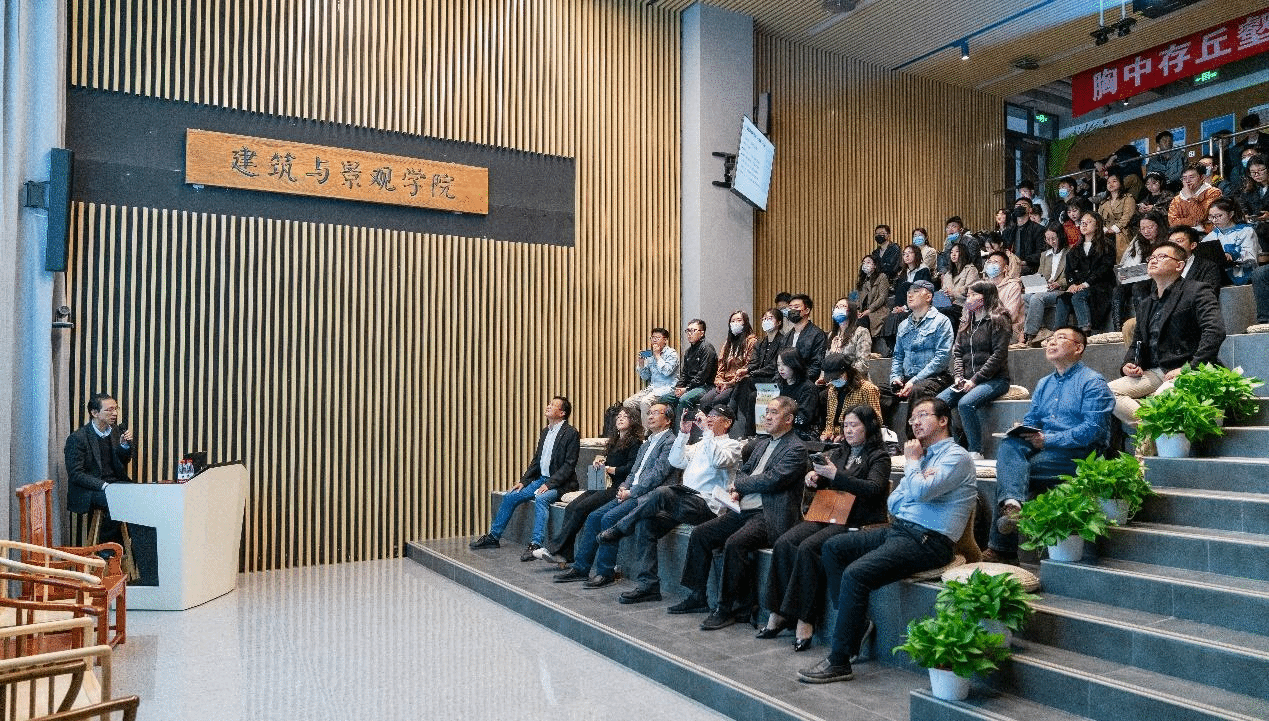
Lecture Venue
Prior to the lecture, accompanied by Yu Kongjian, Mr Yang Baojun toured the College's teaching and research achievements, as well as the editorial accomplishments of the academic journal Landscape Architecture, published by the College. He expressed recognition and encouragement for the College's accomplishments.

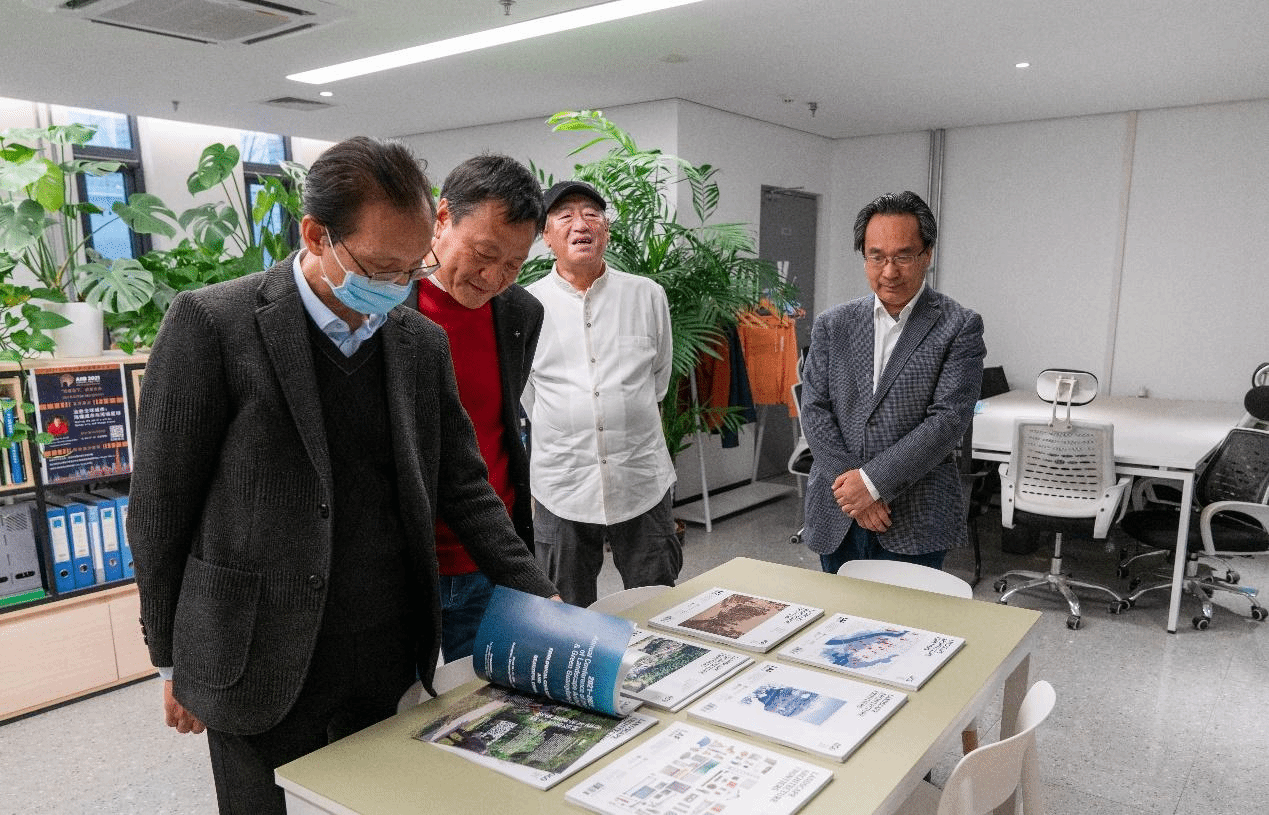
Mr Yang Baojun inspects teaching and research achievements, and the publication of Landscape Architecture
At the outset of the lecture, Yu Kongjian informed guests and attendees that since the College's establishment, the Master Lecture Series has successfully hosted dozens of sessions. By inviting leading figures from ecology, architecture, planning and other fields to share cutting-edge ideas and practical experience with Peking University faculty, students and the wider community, the series has become a hallmark of the College. In this lecture, Yang Baojun, a leading figure in Chinese urban planning, will systematically elucidate the significance of implementing urban renewal initiatives under the theme ‘Implementing Urban Renewal Initiatives: Providing High-Quality Living Spaces for the People.’ Yu Kongjian also took the opportunity to express gratitude to the Beautiful China Institute of the China Academy of Art for donating chairs to the College of Landscape Architecture, supporting the establishment of the ‘Landscape New Building · Museum of Seating.’ The Chinese-style chairs used by the dialogue participants during the lecture were from this very donation.
Beginning with an examination of General Secretary Xi Jinping's important discourse on urban development, Yang Baojun highlighted that the Urban Renewal Initiative represents a major policy deployment by the Party and the state. He elaborated on this from eight perspectives: the fundamental approach to urban work, the core principle of putting people at the center, safeguarding urban historical and cultural heritage, enhancing people's wellbeing, and others. Yang emphasized the imperative of pursuing intensive development. Given the current dual reality of existing stock and new growth, greater emphasis must be placed on the ‘Five Dimensions’: defining total volume, limiting capacity, revitalizing existing stock, optimising new growth, and enhancing quality. Reviewing these eight aspects, a robust theoretical and practical foundation has been established for the urban renewal initiative. Concurrently, Yang elaborated on the General Secretary's concept that ‘the people are the nation, and the nation is the people’ in relation to building cities for the people. These significant discourses have laid a solid theoretical and practical groundwork for the urban renewal initiative. Building upon this, Yang outlined his understanding of implementing the urban renewal initiative and shared insights gained during foundational research and investigative work. He noted that while China's urban development has achieved remarkable progress since reform and opening-up, it also faces multifaceted challenges: prioritising speed over quality in urbanisation, accumulating significant risks and hidden dangers, and lacking distinctive character. Overall, China's urban construction exhibits deficiencies in comprehensiveness, systematic planning, livability, and inclusivity. This gives rise to new circumstances confronting China's urban development and construction in the new development stage. Through case studies of exemplary international urban renewal projects such as New York's High Line Park and Boston's ‘Big Dig’ project, Yang demonstrated that when cities enter a renewal phase, development approaches should shift from incremental construction towards enhancing the quality and efficiency of existing stock while adjusting the structure of new developments. Presently, the primary tasks for implementing China's urban renewal initiative include strengthening systems, optimising layouts, establishing regulatory boundaries, elevating quality, improving efficiency, and transforming development models. Through an analysis of the street renovation project in Yongxin County, Jiangxi Province, Yang systematically outlined how traditional urban planning wisdom can be harnessed to revitalise cultural identity and breathe new life into declining historic towns. Regarding progress in implementing urban renewal initiatives, Yang addressed both achievements and challenges, highlighting exemplary practices in urban regeneration. Vivid case studies from Chengdu's Mengzui Bay, Chongqing's Dai Jia Alley, and Nanjing's Xiao Xihu deepened the audience's understanding of the scope, implications, and successful methodologies of urban renewal, prompting further reflection on diverse approaches to revitalization.
Finally, Yang Baojun outlined the proposed framework for advancing the urban renewal initiative. Key action areas encompass urban ecological restoration projects, the renovation of ageing residential neighbourhoods and shantytowns, the development of cohesive communities and vibrant districts, the enhancement of urban aesthetics, and the improvement of traffic flow. He emphasised that implementing ecological restoration projects to foster organic coexistence between cities and nature, and harmonious cohabitation between humans and the natural world, is an inherent requirement of ecological civilization. Concurrently, he stressed the importance of recognising the positive contribution of historical and cultural heritage to urban development. Citing examples such as the micro-renovation project at Haizhu District's Creative Park in Guangzhou and the upgrade of traditional shopping centeres in Xi'an, he highlighted the need to revitalise underutilised spaces through diverse approaches and elevate the value of urban spaces through cultural content.

Lecture Venue
Yu Kongjian expressed appreciation for Yang Baojun's eloquent presentation, introducing the practical initiatives undertaken by the Sketch Workshop and Friends of Ancient Villages teams—founded by Peking University landscape architecture alumni—in micro-space renovations and the comprehensive conservation and revitalisation of ancient villages nationwide.
During the commentary and dialogue session, attendees engaged in multifaceted exchanges centered on urban renewal. The collision of diverse perspectives stimulated profound reflection among the audience regarding this critical topic. Professor Yin Zhi opened the discussion, noting that the significance of urban renewal lies in addressing the future migration of 200-300 million people into cities. Its success is marked by the return of dynamic youth and mobile populations to urban centers. However, current renewal projects lack support from medium-to-long-term financial instruments. Such initiatives demand a reassessment of design institutes' business models regarding long-term benefits versus costs, while challenging the knowledge scope of planning teams and necessitating more diverse expert collaborations. Professor Lü Bin asserted that consensus must be established that urban renewal is not a large-scale demolition and construction ‘housing campaign.’ The current focus should be on transforming urban development approaches during the high-quality development phase. He emphasised that urban renewal objectives should increasingly center on urban-rural living, with deeper consideration given to social values such as environmental ecology, place spirit, equity, and cultural value recognition. Professor Wu Bihu's reflections on the lecture highlighted that the authenticity of place attachment explains why local experiences cannot be eradicated. Physical and social isolation can be resolved through shared spaces and shared business formats, while flexible management enhances social autonomy and urban vitality. Residential tourism represents an essential pathway for rural revitalisation in peri-urban villages. Director Chen Guangfeng presented the key initiatives of Beijing's urban renewal efforts over the past year from an administrative perspective. He shared insights on how innovative mechanisms can effectively drive urban renewal and guide community co-creation, shifting the mindset from ‘I am required to renew’ to ‘I wish to renew’.

Yin Zhi's remarks
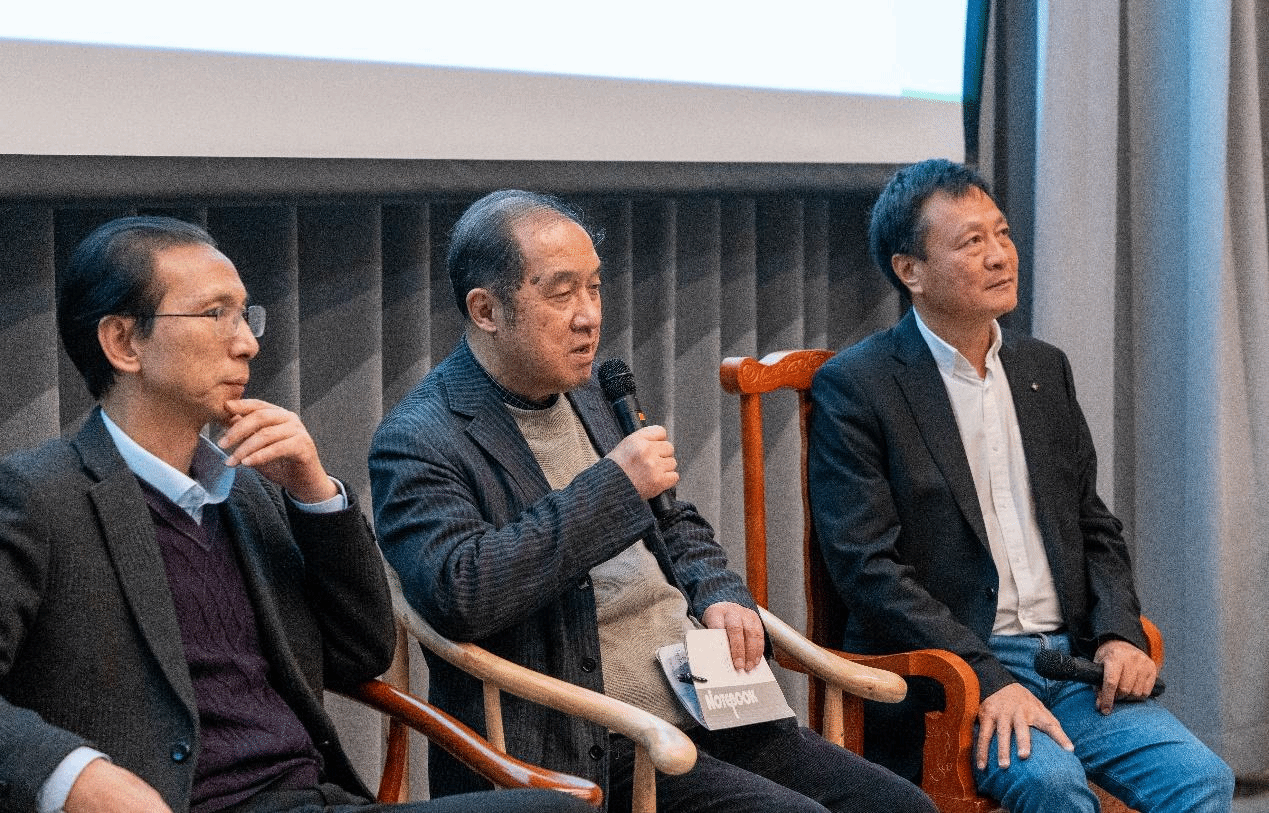
Lv Bin's remarks

Wu Bihu's remarks
In his concluding remarks, Yu Kongjian noted that the people's aspirations for a better life are constantly evolving. This necessitates continuous urban renewal and transformation, presenting ongoing challenges and new tasks for the field of urban development, while also posing demands on professional education. He stated that Mr Yang Baojun's lecture not only instilled confidence and courage in faculty, students of the Landscape Architecture College, and planning professionals, but also underscored that urban renewal—as a major undertaking—must always prioritize people-centered principles to advance social civilization and educational progress.

Yu Kongjian's concluding remarks

Group photograph of guests
The ‘Ecological Civilization and Beautiful Homeland’ Master Lecture Series, hosted by Peking University's College of Architecture and Landscape, invites China's and the world's foremost designers, engineers, and academic leaders in ecology, architecture, planning, and landscape design to deliver high-calibre lectures. Over its decade-long history, the forum has welcomed over 50 distinguished international and domestic scholars as keynote speakers, including Academician Wang Enguo of the Chinese Academy of Sciences; Academicians He Jingtang, Zhang Jinqiu, and Xie Lili of the Chinese Academy of Engineering; Mike Goodchild, Michael Sorkin, Barry Bergdoll, and Wu Hung, members of the American Academy of Arts and Sciences; and Gerald E. Galloway, member of the National Academy of Engineering. In 2023, the Master Lecture Series will continue to deliver high-calibre academic lectures through a hybrid online and offline format.
Text by Wang Kexin
Photography by Ma Zhe
Edited by Zhu Liangliang
