Building an Inclusive Barrier-Free Environment: Forum on Inclusive Barrier-Free Environmental Governance and Cultural Development Held at Our College
On 17 May, the Forum on Inclusive Barrier-Free Environmental Governance and Cultural Development, jointly organised by the China Association of Volunteers for the Disabled, the Chinese Society for Landscape Architecture, and Peking University's School of Architecture and Landscape Architecture, was successfully convened at the latter institution.
This forum focused on the construction and governance of accessible and inclusive environments, aiming to promote in-depth exchanges between the landscape architecture profession and inclusive barrier-free environment development. It explored directions for modern urban barrier-free environment construction and advanced the high-quality development of accessible environment initiatives. Attendees included Lü Shiming, Vice-Chairman of the China Disabled Persons' Federation and President of the China Association of Volunteers for the Disabled; Zuo Xiaoping, Secretary-General of the Chinese Society for Landscape Architecture; Ye Jingyi, Professor at Peking University's School of Law; Li Rui, Senior Programme Officer for Child Protection at UNICEF China; Wang Zhifang, Deputy Dean and Research Fellow at Peking University's School of Architecture and Landscape Architecture; Li Jianfei, Professor at Renmin University of China's School of Law; Li Yunyuan, Director of the Landscape Planning and Design Institute at Beijing Forestry University; Sun Yiping, Director of the Accessible Environment Promotion Committee of the China Association of Volunteers for the Disabled; Luo Yan, Deputy Director of the same committee; Liu Shangjun, Postdoctoral Fellow at the Institute of Population Research, Peking University; Zhao Zhen, General Manager of the Innovation Design Business Group at Aoya Co., Ltd.; Ma Xiaowei, Chief Designer at Shanghai Yige Design; Lü Jianqiang, Deputy Chief Engineer at the Ecological Landscape Construction Research Institute of China Architecture Design & Research Group Co., Ltd.; and Zhuge Xuejin, Deputy Director of China Landscape Architecture Planning and Design Research Co., Ltd., were among those in attendance.


Forum Venue
In Lü Shiming address,he emphasised the critical importance and necessity of constructing accessible and inclusive environments, urging continued efforts to disseminate the culture and values of accessibility throughout society. Zuo Xiaoping highlighted that creating accessible environments constitutes a vital responsibility for the landscape architecture sector. He advocated for the Chinese Society of Landscape Architecture to spearhead and lead in this field, driving improvements to the overall societal environment and fostering the development of inclusive, age-friendly urban spaces. Wang Zhifang explained that Peking University's School of Architecture and Landscape Architecture has long prioritised the relationship between nature and humanity. With the acceleration of population ageing and the progressive refinement of accessible environment legislation, the school is increasingly focused on creating high-quality accessible environments.

Lü Shiming delivering remarks

Zuo Xiaoping delivering remarks

Address by Wang Zhifang
Li Dihua and Li Yunyuan chaired the thematic presentation sessions respectively: Session One on ‘Legal Framework Development for Inclusive Accessible Environments’ and Session Two on ‘Inclusive Accessibility in Environmental Construction Professions’. Experts from Peking University Law School, Renmin University of China Law School, Peking University Institute of Population Research and other institutions engaged in in-depth discussions on topics including legal framework development for inclusive accessibility and demand-driven approaches to promoting accessible and inclusive environments. Experts and scholars from Ouyang Co., Ltd., Shanghai Yige Design, China Academy of Architectural Design & Research, China Landscape Architecture Planning & Design Research Co., Ltd., and Peking University School of Architecture and Landscape Architecture shared their insights and practical experiences. Presentations covered universal considerations in accessible design, key points in accessible landscape construction, developments in North American accessibility legislation, and details of humanistic urban design. Feasible recommendations were also proposed for advancing inclusive and accessible environment development.

Li Dihua chaired

Li Yunyuan chaired
Ye Jingyi shared research findings on the ethical underpinnings of accessible environment development within a legal framework, covering current research status, theoretical foundations, general principles, and practical pathways. She emphasised the need to fully incorporate and prioritise ethical principles, achieving dual-track advancement of accessible environment development through both legal and ethical imperatives. Li Jianfei highlighted the practical significance of the forthcoming enactment and implementation of the Accessible Environment Construction Law. He addressed its status and function within disability legislation, its value and implications for realising disabled persons' rights, and its implementing regulations. Zhao Zhen shared case studies on human-centred communities, urban greenways, and child-friendly design, exploring universal accessibility principles. He emphasised that designers must exercise greater patience to deliver more meticulous work in the era of existing stock. Ma Xiaowei presented perspectives on future urban accessibility from the standpoint of contemporary humanism and landscape-oriented cities supported by vertical design. He advocated for landscape architecture to coordinate with other disciplines, positioning vertical design as a core technique and accessibility design as a key element in creating de-symbolised contemporary Chinese gardens. Lü Jianqiang shared extensive design practice experience regarding the scope, key points, and detailed control of accessibility in garden and green space development. Zhuge Xuejin outlined the evolution of North American accessibility legislation and its relationship with registered landscape architects, highlighting the legal competencies, professional conduct, and ethical standards required of practitioners. Li Dihua explored advancing humanistic cities through inclusive accessibility, sharing design philosophies for implementing such environments. He outlined six tasks for creating accessible, inclusive humanistic cities through detail-oriented design: transforming mindsets, building transparent cities, widening pavements, ensuring full-length street connectivity, getting it right first time, and fostering volunteerism and public interest litigation. Liu Shangjun shared experience in demand-driven accessibility promotion through case studies like Changchun Garden's age-friendly community initiative, alongside Beijing's established age-friendly community indicator system.
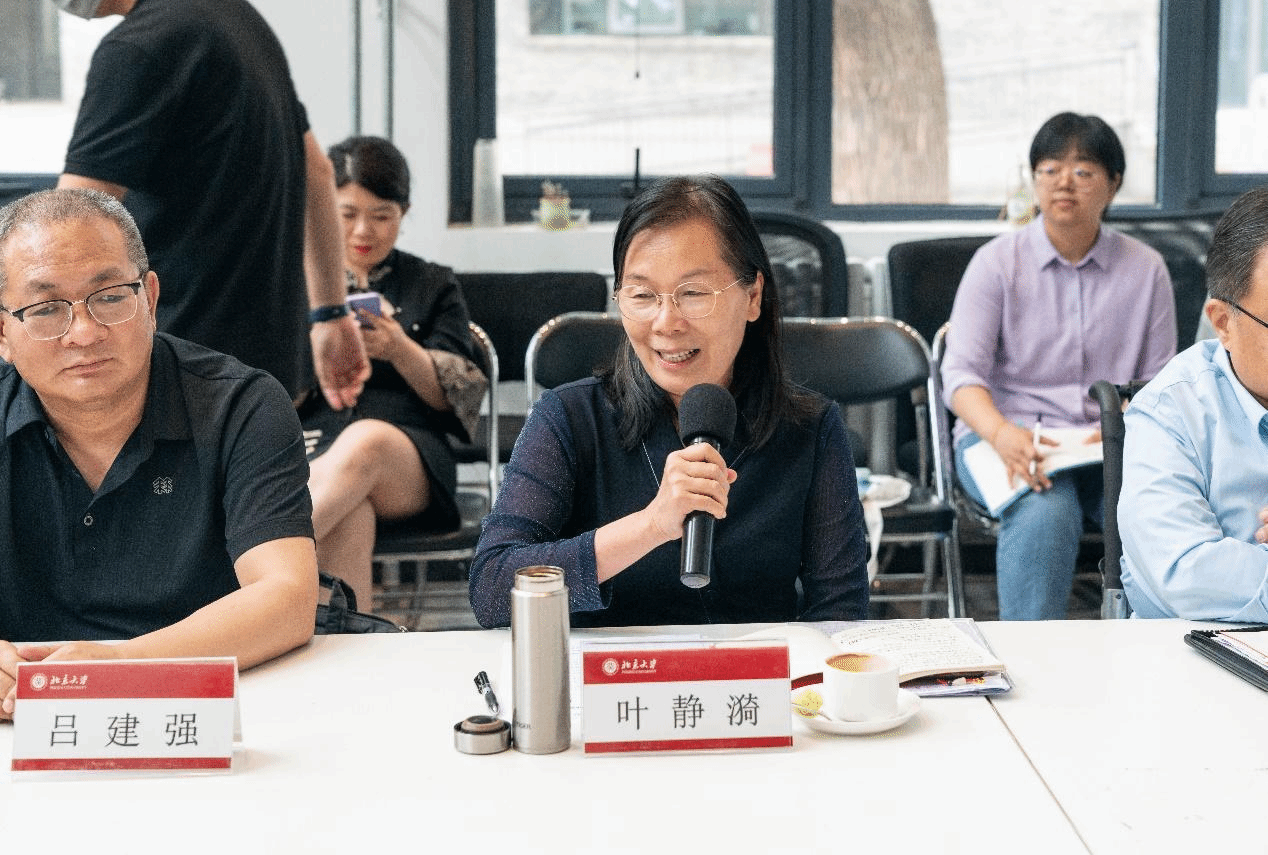

Guest Address
This forum provided professionals in relevant fields with opportunities for exchange and learning, holding positive significance for advancing the development of accessible and inclusive environments. The event was also streamed online, attracting a cumulative viewership of 1.93 million. Building accessible and inclusive environments is a long-term endeavour requiring concerted effort and united commitment.
Editor/Zhu Liangliang
