Peking University Hosts Seminar on the Accessible Environment Construction Law
On June 28, 2023, the Third Session of the 14th National People's Congress Standing Committee passed the Accessible Environment Construction Law. To actively respond to the enactment of this legislation and collectively anticipate its implementation, the College of Architecture and Landscape , in collaboration with the School of Law and the Institute of Population Research, organized a special study session on the Accessible Environment Construction Law on the evening of 28 June and the morning of 29 June 2023. Participants shared insights gained from the promulgation of the law and discussed expectations for future work. The seminar was held in Room 307, Kaoyuan Building, Peking University Law School. Attendees included: Professor Chen Gong, Director of the Institute of Population Research; Associate Professor Li Dihua, Vice Dean of the College of Architecture and Landscape ; Associate Professor Jin Jinping, Director of the Center for Non-Profit Organization Law at the School of Law; Yang Xingwen, Deputy Secretary of the Party Working Committee and Director of the Administrative Office of Yanyuan Subdistrict; Tang Gala, Party Branch Secretary and Deputy Director of the Peking University Real Estate Management Department; along with staff from the logistics system and Yanyuan Subdistrict, students, and media representatives. The meeting was chaired by Ye Jingyi.
Participants first viewed the News Broadcast report on the passage of the Accessible Environment Construction Law during the Third Session of the 14th National People's Congress Standing Committee. They then collectively studied the legal provisions and relevant learning materials.

Group viewing of News Broadcast
Ye Jingyi emphasized that the Accessible Environment Construction Law represents a crucial manifestation of upholding a people-centered approach and respecting human rights. It constitutes an essential requirement for implementing the national strategy to actively address population ageing and provides robust safeguards for enhancing the quality of accessible environment construction. Moving forward, we must delve deeper into the law's implications, commit to theoretical innovation research on this legislation, and contribute solid momentum towards realizing Chinese-style modernisation.
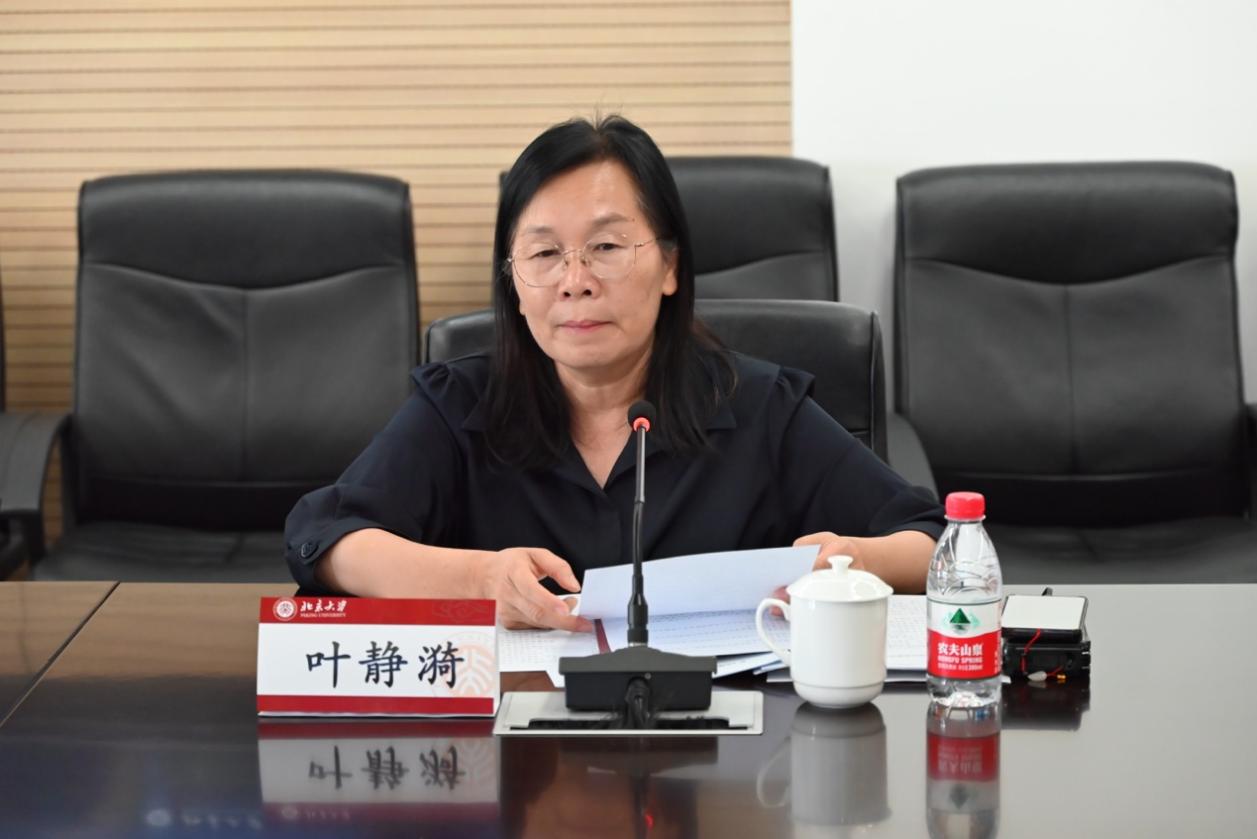
Ye Jingyi's remarks
Chen Gong outlined the long-standing contributions of Peking University's research team in theoretical development, policy formulation, and educational initiatives concerning accessible environments. Drawing upon research projects, he clarified the roles of experts and scholars as researchers, practitioners, witnesses, interpreters, promoters, and implementers within the accessible environment movement. He emphasized Peking University's strengths lie in community support, multi-departmental collaboration and multidisciplinary talent. Research should be practice-driven to ensure its contextual relevance, forward-looking nature and exemplary impact, thereby sustaining Peking University's influence in accessibility studies.

Chen Gong's remarks
Li Dihua expressed heartening approval of the Accessible Environment Construction Law's stipulation to ‘safeguard the equal, full, and convenient participation and integration of persons with disabilities and the elderly into social life, promoting shared benefits of economic and social development for all members of society.’ He highlighted the challenges in implementing this legislation, which represents a significant breakthrough in governance philosophy. Recalling the establishment of auxiliary experiential courses, he emphasized their role in awakening students' awareness of environmental shortcomings and fostering empathy. He expressed the aspiration to establish Peking University as a model barrier-free campus, further implementing the university's educational philosophy of ‘teaching to educate’ and ‘environmental education’ in fostering virtue and nurturing talent.

Li Dihua's remarks
Jin Jinping noted that the Accessible Environment Construction Law embodies advanced legislative principles with a broad vision, grounded in present realities while prioritizing future development. It shifts the perspective on accessible environment construction from benevolent social assistance to the safeguarding of legitimate rights, aligning with the latest international accessibility concepts. She emphasized the importance of ensuring systemic coherence between this law and other legislation, as well as achieving synergistic social and economic benefits in environmental development.

Jin Jinping's remarks
Yang Xingwen observed that the Accessible Environment Construction Law significantly broadens its coverage, imposing explicit service obligations and functional requirements on community service institutions, including sub-district offices. He recalled collaborative achievements with professors such as Chen Gong and Li Dihua in developing age-friendly demonstration projects. He expressed hope that sub-district operations would further align with Peking University's research resources and teaching arrangements, thereby contributing to student development and facilitating the practical application of academic research outcomes.
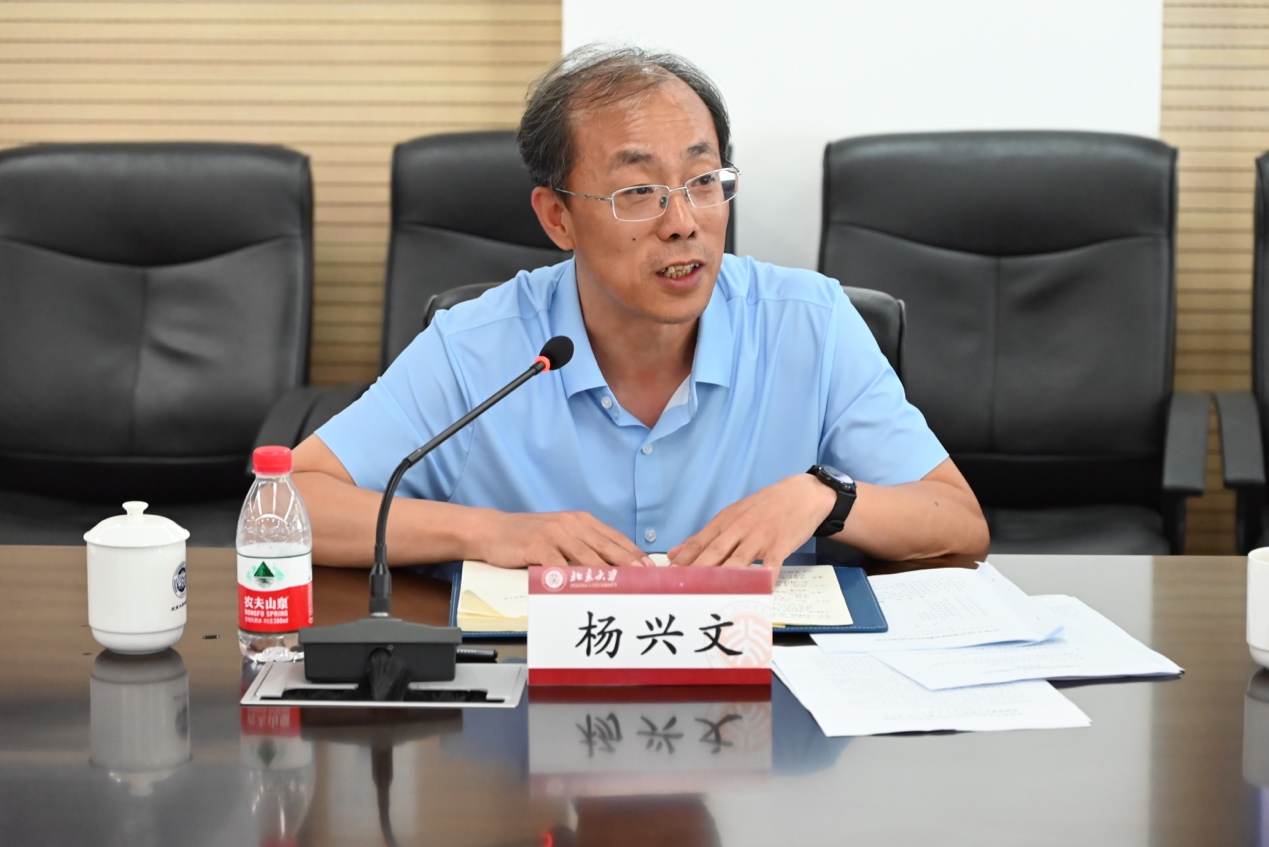
Yang Xingwen's remarks
Tang Gala explained that as a functional department of Peking University, the Real Estate Management Department has consistently paid close attention to the details of accessible environment construction. She shared insights from the accessible design of the campus's main thoroughfares, expressing hope that under the guidance of the university's expert team, an accessible environment befitting Peking University's elegant campus character could be created, thereby fulfilling the responsibilities mandated by law.
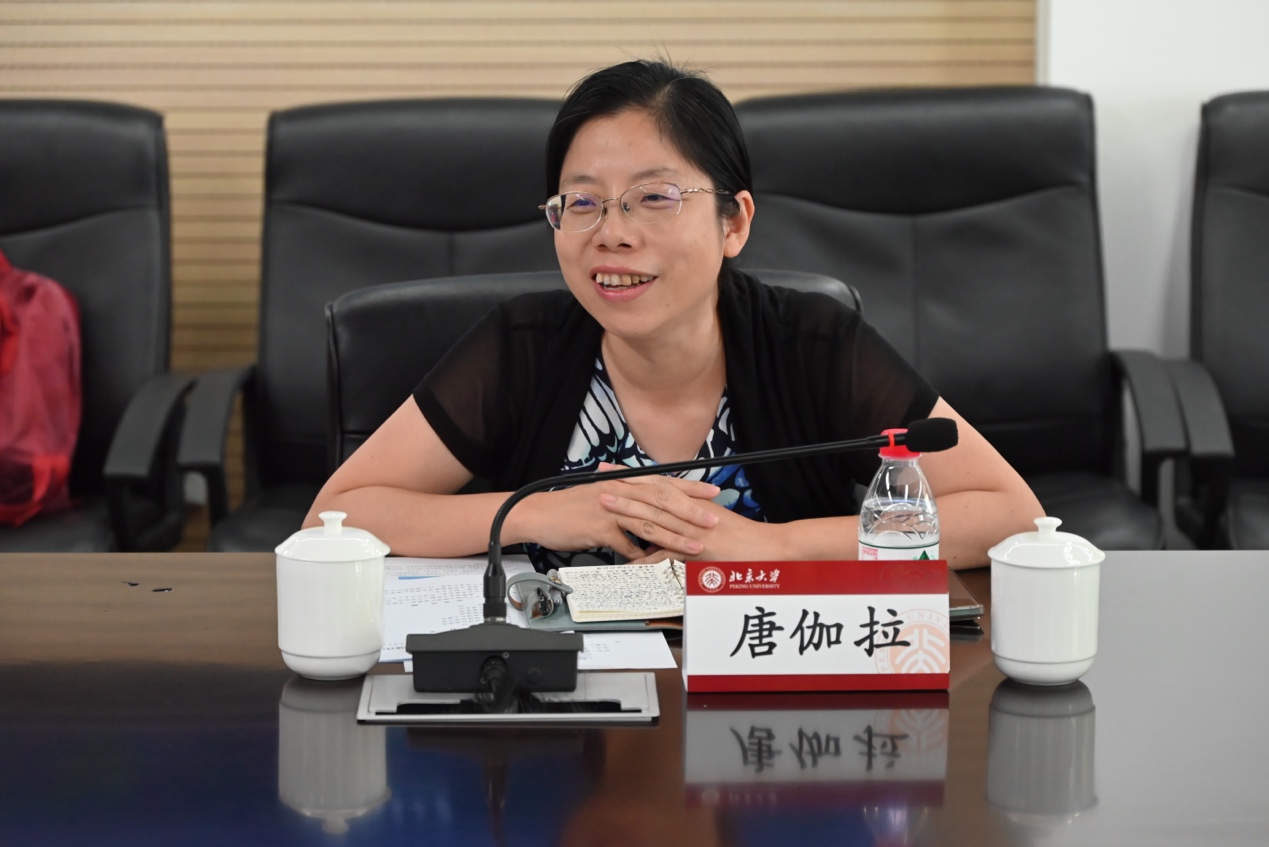
Tang Gala's remarks
Following presentations by experts and relevant department heads, staff from the logistics system and Yanyuan Subdistrict Office, alongside current students, shared their perspectives and reflections on the enactment of the Accessible Environment Construction Law.
Ye Jingyi summarised the seminar. She noted that over two days of exchanging insights, faculty and students from diverse disciplines had analysed the law's intent and specific provisions from both theoretical and practical perspectives, drawing on their professional experiences. They had also articulated concrete proposals for future actions, achieving significant consensus. She emphasized that this legislation, characterised by its strong inclusivity, high significance and broad scope, would require considerable effort to implement effectively. As Peking University faculty and students with long-standing research in accessible environment development, they must uphold the principles of prioritizing the campus and education. Through research and practice within the university, they should cultivate awareness of accessible environments and refine interdisciplinary research outcomes in this field.

Group Photograph
On the evening of 28 June, the very day the Accessible Environment Construction Law was passed, the School of Architecture and Landscape Architecture, the Faculty of Law, and the Institute of Population Studies promptly organized over 30 faculty members and students from the three departments to collectively watch the live broadcast of the News Network. The audience engaged in active discussions, displaying high enthusiasm and strong reactions, which effectively promoted multidisciplinary dialogue and exchange.
Excerpts from Student Reflections:
Social integration stands as the paramount legislative principle underpinning the Accessible Environment Construction Law. Guided by this principle, the enactment of the law has transformed the status of accessibility requirements for persons with disabilities and the elderly, shifting their position from ‘recipients of relief’ to ‘subjects of rights.’ This transition redirects focus from addressing ‘individual physiological limitations’ towards examining ‘societal environments' impact on members of society.’ As doctoral candidates, we must remain vigilant regarding the practical implementation of the Accessible Environment Construction Law. Leveraging Peking University's foundational strengths in accessible environment development, we should conduct thorough investigations into the law's execution, further explore its implications, and dedicate ourselves to theoretical innovation. This endeavour will contribute modestly to advancing Chinese-style modernisation.
——Shi Xiaowei, Doctoral Candidate, Class of 2022, School of Law
General Secretary Xi Jinping has emphasized that the development of accessible facilities serves as a hallmark of a nation's and society's civilization. The Accessible Environment Construction Law closely aligns with the overarching requirement outlined in the report to the 20th CPC National Congress for social development to ‘enhance people's well-being and improve the quality of life,’ reflecting the defining characteristic of Chinese modernisation as a process where all citizens share in the fruits of social progress. As the legislation approaches implementation, we must closely observe its operational realities, strengthen research on legal effectiveness, and prioritise normative interpretation and systemic coherence. This will contribute to establishing comprehensive accessibility regulations and technical standards, thereby building a tiered legal framework for barrier-free environments.
——Gao Yuchen, Master's Candidate, Class of 2022, Faculty of Law
Historically, discussions of ‘accessibility’ primarily evoked associations with persons with disabilities. However, as population ageing intensifies, an increasing number of citizens require barrier-free environments, endowing accessibility initiatives with greater humanitarian, social, and economic significance. As China's first dedicated legislation on accessible environment development, the Accessible Environment Development Law provides comprehensive provisions across infrastructure, institutional frameworks, and oversight mechanisms. It holds extraordinary significance for enabling persons with disabilities and the elderly to integrate more actively and healthily into society, offering fundamental legal safeguards to ensure modernisation's benefits reach all members of society. This embodies both the theoretical construct and practical manifestation of the principle that ‘development outcomes should be shared by the people’.
——Wang Yue, Master's Candidate, Population Research Institute, Class of 2022
The Accessible Environment Construction Law imposes stricter requirements on accessible design, demanding particular attention to urban greenway planning, tactile paving systems, accessibility in public spaces and buildings, and residential accessibility. All disciplines must collaborate towards constructing an accessible environment. We must prioritise standardization and modularization in accessible design to accommodate diverse scenarios and contexts, thereby expanding accessibility coverage. Through interdisciplinary collaboration, we shall jointly create more comfortable and seamless accessible environments and cities, enabling more members of society to venture out with confidence and freedom to explore wherever they wish.
——Wang Kexin, 2022 Master's Student, College of Architecture and Landscape Design
Editor/Zhu Liangliang
