2024 Climate Design – Peking University Master Lecture Series on Ecological Civilisation Held at Our College
On October 29, the ‘2024 Climate Design – Peking University Master Lecture Series on Ecological Civilisation’ convened at Peking University's School of Architecture and Landscape Architecture. The forum brought together global experts in climate change and design innovation to explore interdisciplinary pathways for addressing the climate crisis. Hosted by Peking University, the event was jointly organised by the School of Architecture and Landscape Architecture, the School of Engineering, the College of Urban and Environmental Sciences, the School of Environmental Sciences and Engineering, the School of Earth and Space Sciences, the Carbon Neutrality Research Institute, and the Office of International Cooperation. with joint support from the Key Laboratory of Water Ecological Protection and Water Heritage (in preparation) of the Ministry of Water Resources, the Innovation Base of the Asia Centre for Nature-Based Solutions, the Landscape Architecture and Beautiful China Construction Committee of the Chinese Society for Urban Studies, the Climate Change Response Committee of the Chinese Society of Landscape Architecture, and the Watershed Spatial Planning Branch of the Chinese Society for Urban Planning.

Professor Yu Kongjian, Dean of Peking University's School of Architecture and Landscape Architecture, chaired the forum and delivered the opening address, welcoming global experts gathered to collectively examine the threats to human survival posed by multiple crises – including floods, droughts, and wildfires – stemming from climate change. He emphasized that the forum's core objective was to advance climate resilience through ‘design thinking’, advocating holistic solutions spanning multiple disciplines and scales. This encompasses collaboration across civil and environmental engineering to architectural design, driving green transformation and sustainable development. He stressed that in confronting the climate crisis, isolated technological measures prove inadequate; only through integrating diverse nature-based solutions and collaborative efforts can genuine ecological civilisation be achieved.

Zhang Jin, Member of the Standing Committee of the Party Committee and Vice President of Peking University, and Academician of the Chinese Academy of Sciences, welcomed attending experts and scholars on behalf of Peking University. He explored the challenges of the ‘climate design’ concept from a materials science perspective. He noted that across scales from the planetary to the microscopic material level, the scientific community predominantly employs reductionist approaches, focusing on the properties of microstructures such as materials and neurons, yet faces limitations when addressing complex systemic issues. Using the human brain as an example, he highlighted the efficiency of natural systems: the human brain drives 86 billion neurons with minimal energy, whereas artificial systems with equivalent computational power consume vast amounts of energy. Zhang Jin argued that solving climate issues relies not only on precise analysis and technology but also on multidisciplinary collaboration and systemic thinking. He recommended incorporating expertise from broader fields such as computer science and materials science into climate design to achieve collaborative innovation and more comprehensive solutions.

Distinguished scholars and experts from various nations delivered compelling keynote addresses from diverse perspectives. Professor Veerabhadran Ramanathan, a member of the National Academy of Sciences and the American Academy of Arts and Sciences, and Professor at the University of California, San Diego, underscored the urgency of climate change. He noted that climate change has evolved from global warming into a climate crisis, impacting the survival of billions worldwide. With annual human carbon dioxide emissions reaching 120 billion tonnes, the Earth is shrouded in an ‘artificial blanket,’ making greenhouse gas emissions a global challenge. Humanity must shift its narrative, prioritising research into human health and wellbeing alongside personalising the impacts of climate change. He further outlined mitigation (reducing climate risks), adaptation (managing climate risks), and transformation (driving societal change) as the three pivotal pillars of climate resilience strategy.
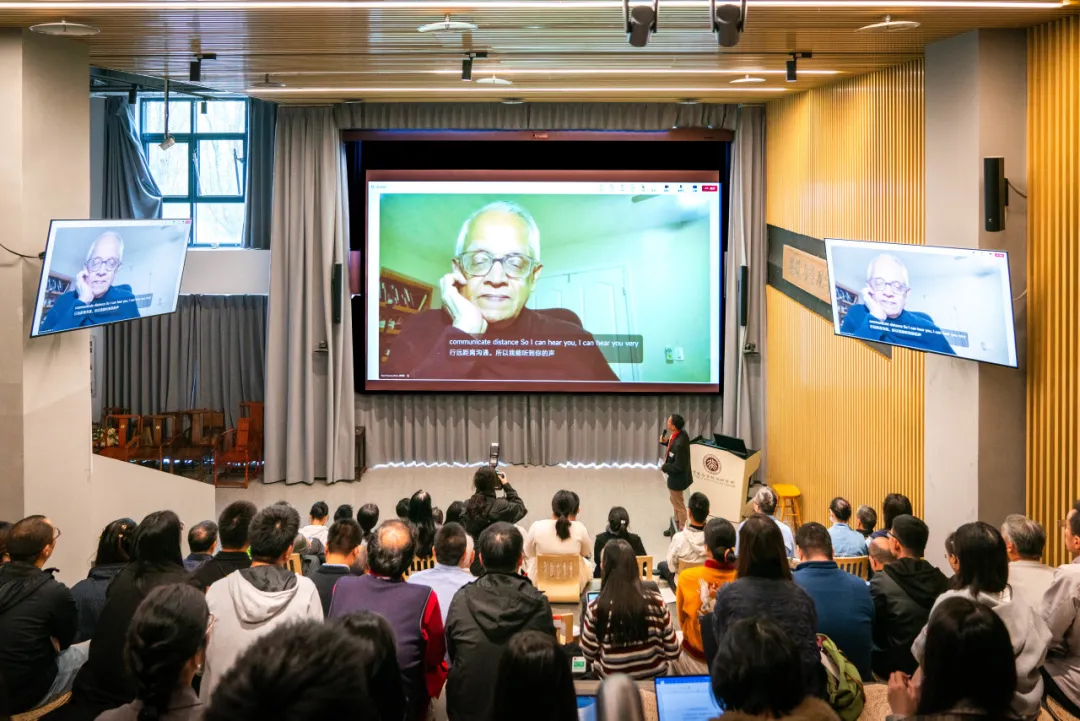
Peter Head, Fellow of the Royal Academy of Engineering, focused on global challenges and solutions concerning climate change. He first expressed grave concern over climate change, stressing humanity's approach to multiple ‘tipping points’—such as diminished carbon absorption by land and oceans, potential disruption of the Atlantic Meridional Overturning Circulation, and water cycle imbalances caused by deforestation—which could precipitate further climate deterioration. He outlined his role within the United Nations Office for Disaster Risk Reduction and his founding of the Ecological Isolation Trust, an organisation providing open-source tools to bolster global climate change responses.

Elfatih Eltahir, a member of the US National Academy of Engineering and Professor at MIT, noted that observed surface temperatures have risen continuously over the past century. Increased global emissions of fossil fuels have led to a significant rise in methane emissions, making current and future policy decisions crucial for the trajectory of global warming. He emphasized that forecasting the impacts of climate change on locally relevant concerns at regional and local scales can more clearly reveal climate risks, thereby better informing local communities. Understanding climate change impacts at the local level requires practical integration with local realities.

Glen T. Daigger, a member of the US National Academy of Engineering, foreign member of the Chinese Academy of Engineering, and professor at the University of Michigan, examined the challenges and strategies of global water resource management from an environmental engineering perspective. He noted that climate change is placing increasing pressure on water resources, rendering traditional management approaches ineffective against extreme weather events such as droughts and floods. To address this, he proposed a ‘combined management’ strategy integrating multiple natural and engineered measures—including sponge cities and floodplains—to respond more flexibly to water scarcity or surplus under varying climatic conditions.

Cynthia E. Smith, Curator at Cooper Hewitt, National Design Museum, USA, outlined the institution's mission regarding social responsibility, emphasising that design should prioritise the needs of the majority, particularly those addressing environmental challenges. She proposed that socially responsible design should enhance social inclusivity, support equality, justice and mutual cooperation, respect the ecosystems upon which we depend, and integrate diverse voices and cultures to achieve interdisciplinary and cross-sectoral design collaboration.

Professor Makoto Yokohara of the University of Tokyo highlighted the profound impact of climate change on urban environments, particularly the intensifying extreme weather phenomena triggered by global warming. For instance, the blooming period of Japanese cherry blossoms has noticeably advanced, reflecting climate change's direct impact on ecosystems. He stressed that urban planners and designers must fully consider climate change's implications when designing future cities. Through innovation and collaboration, they should create more resilient urban environments to confront escalating climate challenges.

Professor Peter Childs, a Fellow of the Royal Academy of Engineering and Professor at Imperial College London, contends that society comprises multiple facets. Whilst society can develop and evolve organically, we may also make deliberate decisions through human intervention—namely, design. He introduced morphological analysis, a commonly employed design tool, and demonstrated its significant potential through multiple case studies in exploring alternative configurations of societal structures.

Academician Ma Jun of the Chinese Academy of Engineering and Professor at Harbin Institute of Technology analysed challenges facing urban water systems, including greenhouse gas emissions, flooding, and uneven water distribution. He noted that current water treatment technologies primarily rely on biological processes, which though capable of degrading organic matter, consume substantial energy during treatment. He advocated shifting from traditional end-of-pipe treatment models towards resource-recycling systems to achieve more efficient water resource management.

Yu Kongjian, a member of the American Academy of Arts and Sciences and Professor at Peking University, discussed integrating grey infrastructure with nature-based green infrastructure to develop holistic solutions addressing climate change and environmental challenges. By merging “grey” and “green” thinking, he proposed nature-based solutions that can both adapt to environmental shifts and mitigate climate issues to some extent. He emphasised that the core of tackling climate change lies in water resource management, not merely carbon emissions. By promoting nature-based green infrastructure and empowering individual households, communities, and cities to participate collectively, tangible improvements to global climate issues may be achievable within a relatively short timeframe.

Finally, participating scholars engaged in a lively roundtable discussion, unanimously agreeing that integrating knowledge and resources across disciplines is crucial when confronting complex climate challenges. This exchange not only provided a valuable opportunity for sharing experiences but also demonstrated shared confidence and anticipation in collectively addressing climate change.

Editor/Zhu Liangliang
