Stepping into the Heart of IFLA's Global Governance! Faculty and Students from the College Showcase China's Strength at the 62nd IFLA World Congress
From October 25 to 30, 2026, the 62nd International Federation of Landscape Architects (IFLA) World Council, World Congress, and Asia-Pacific Regional Congress were held in Hong Kong, China. Under the theme "Liminal Landscapes: Shifting Boundaries of Watersheds and Coastlines," the event brought together more than 1,000 landscape architecture professionals from over 80 countries and regions worldwide to discuss the cutting edge of the discipline’s development.
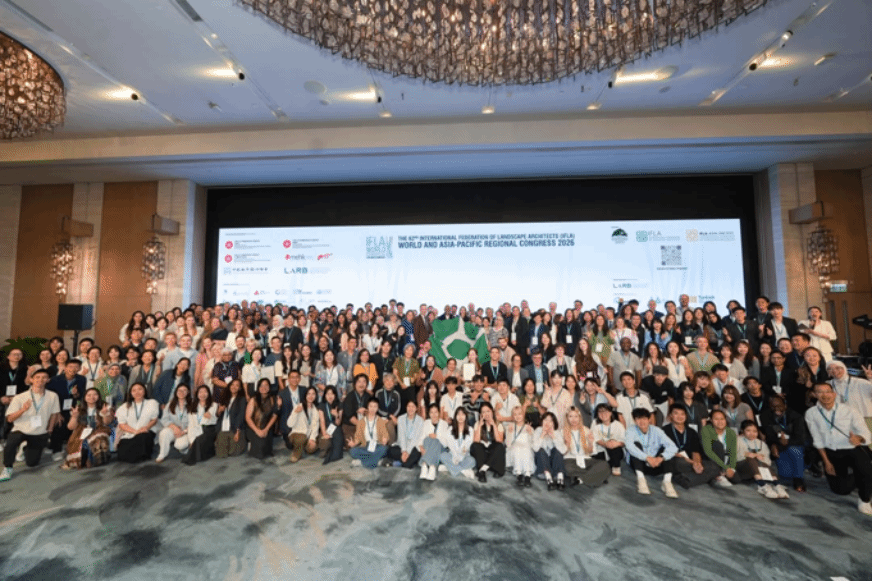
Scenes from the IFLA Conference
At this year’s conference, Li Dihua, Associate Dean of the College of Architecture and Landscape , Peking University, was invited to deliver a keynote speech titled "Legacy and Transformation: Rethinking the Mission of Landscape Architecture amid Climate and AI Shifts from a Century-Long Disciplinary Perspective ." Drawing on the discipline’s century-long evolution, he explored the impact of contemporary transformations—such as climate change and artificial intelligence—on the mission, knowledge system, and practical direction of landscape architecture, and reflected on how the discipline can respond to new global challenges while honoring its historical legacy. The presentation argued that planning and design projects are crucial to the well-being of individuals and the sustainability of diverse landforms; each project is a unique case requiring in-depth research and meticulous design that embodies human care in every detail. By enabling designers to fully explore the potential applications of knowledge, technology, and experience; delve into the essence of issues; and provide evidence-based support, AI will offer unprecedented convenience for humanity in seeking solutions to various pressing survival and land-use challenges. Li Dihua called for a shift in the landscape architecture industry’s mindset and educational practices to cultivate design professionals capable of addressing real-world needs and future challenges. The presentation received high praise from attendees and was regarded as a clear-eyed, optimistic, and pragmatic assessment of the purpose and direction of design education—particularly against the backdrop of the dual impact on the planning and design industries and education resulting from the widespread adoption of AI and the transformation of global urbanization. On October 26, at the symposium “Asian Perspectives on Planetary Landscape Architecture Education (HKU x IFLA Symposium)” hosted by the Faculty of Architecture at the University of Hong Kong, Li Dihua delivered a keynote speech titled “Can Design Education Move Beyond Talking to Itself?” on behalf of the College of Architecture and Landscape ,Peking University. He shared his reflections on design education reform and his aspirations for cultivating design professionals equipped with design thinking and a commitment to truth and pragmatism.
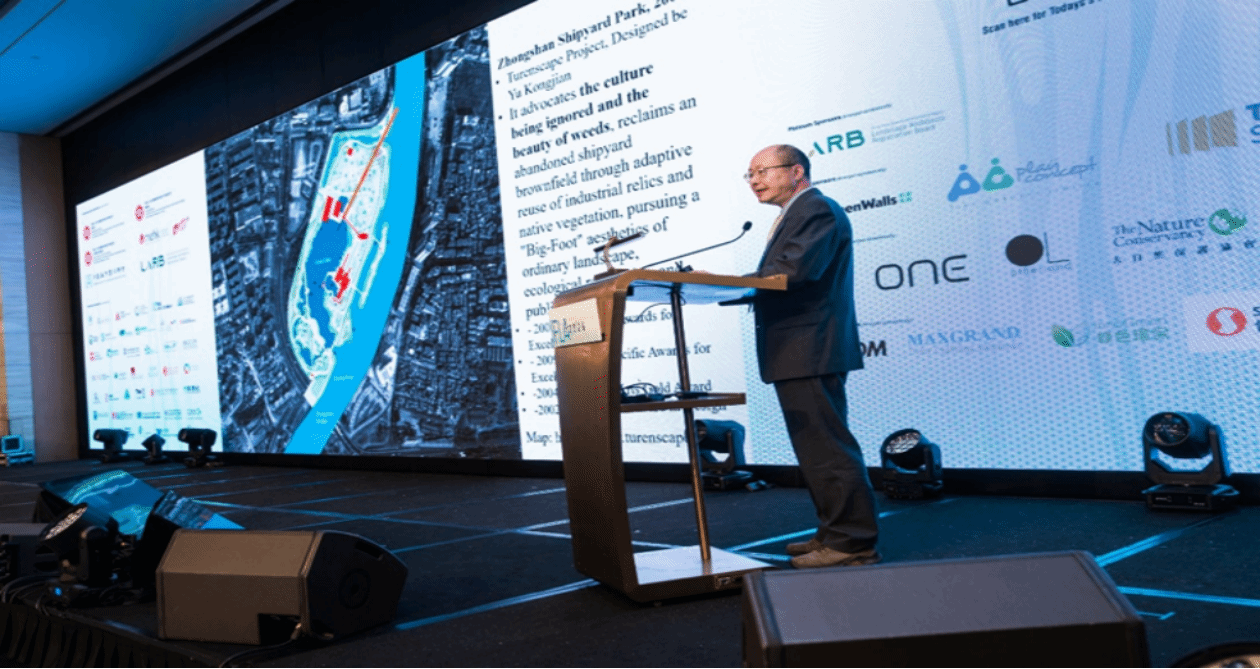
Li Dihua Delivers Keynote Speech at the IFLA World Congress
During the conference, IFLA completed the selection and voting process for its new Executive Committee and Board of Directors, and officially announced the results at the 62nd IFLA World Council meeting held from October 25 to 30. Wang Zhifang, Vice Dean of the College of Architecture and Landscape , Peking University, was elected Treasurer, as well as a member of the IFLA Executive Committee and Board of Directors, with an initial two-year term. This marks the formal entry of Chinese landscape architecture professionals into IFLA’s global core governance structure.
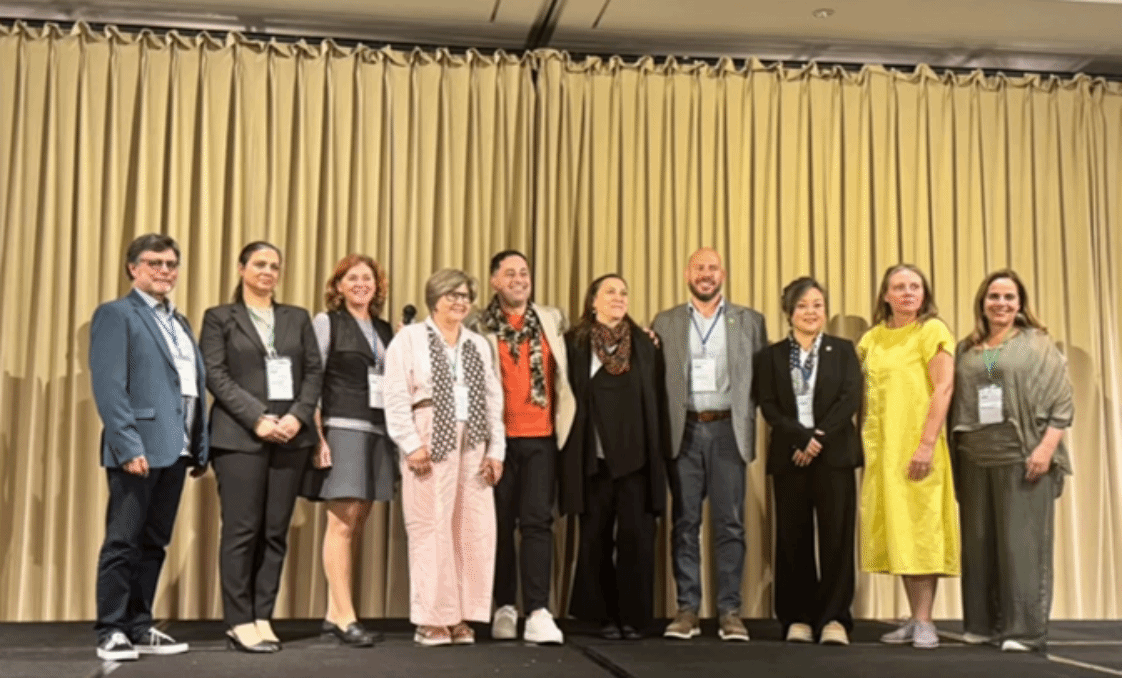
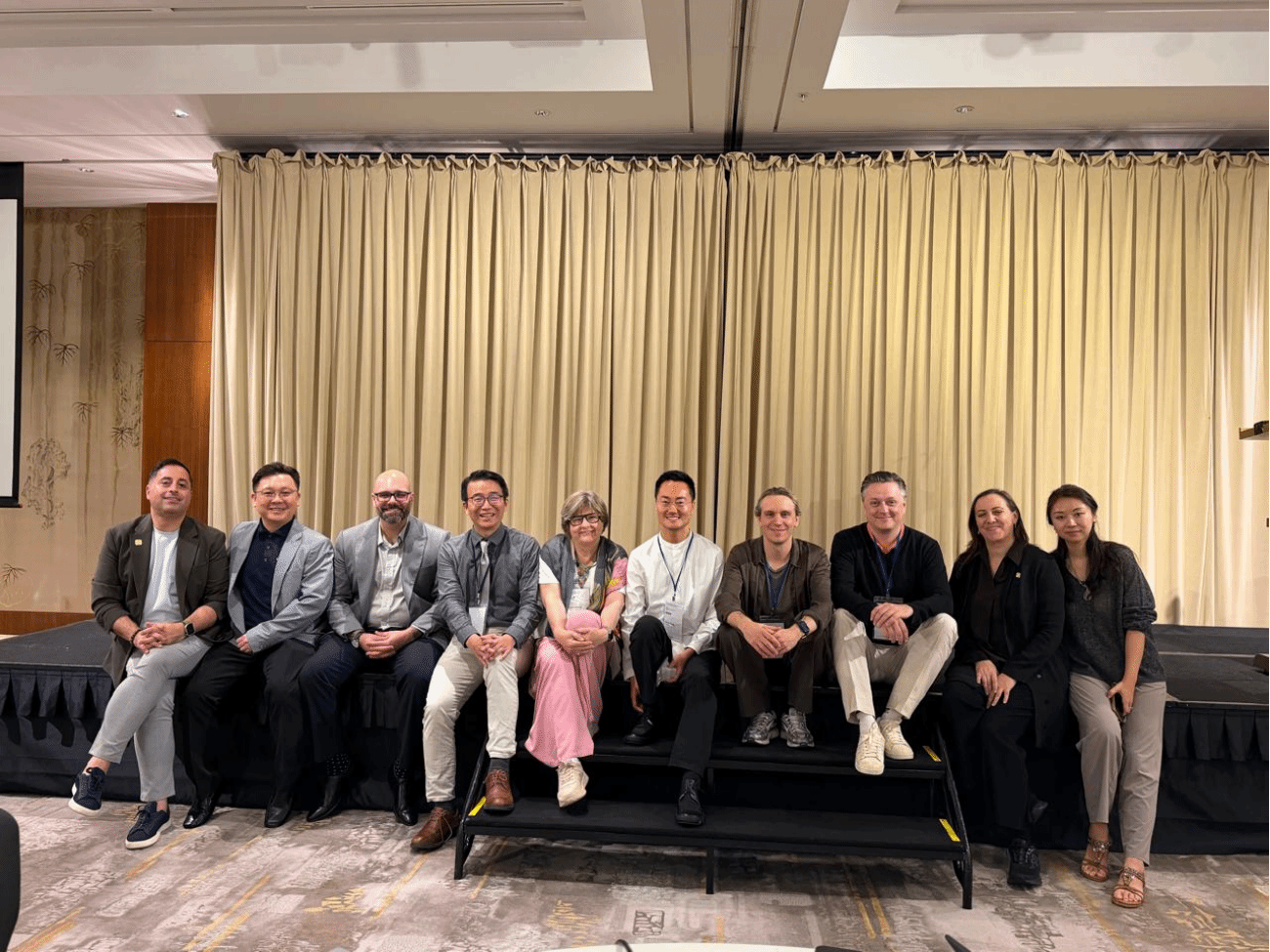
Group Photo of the First IFLA Board of Directors
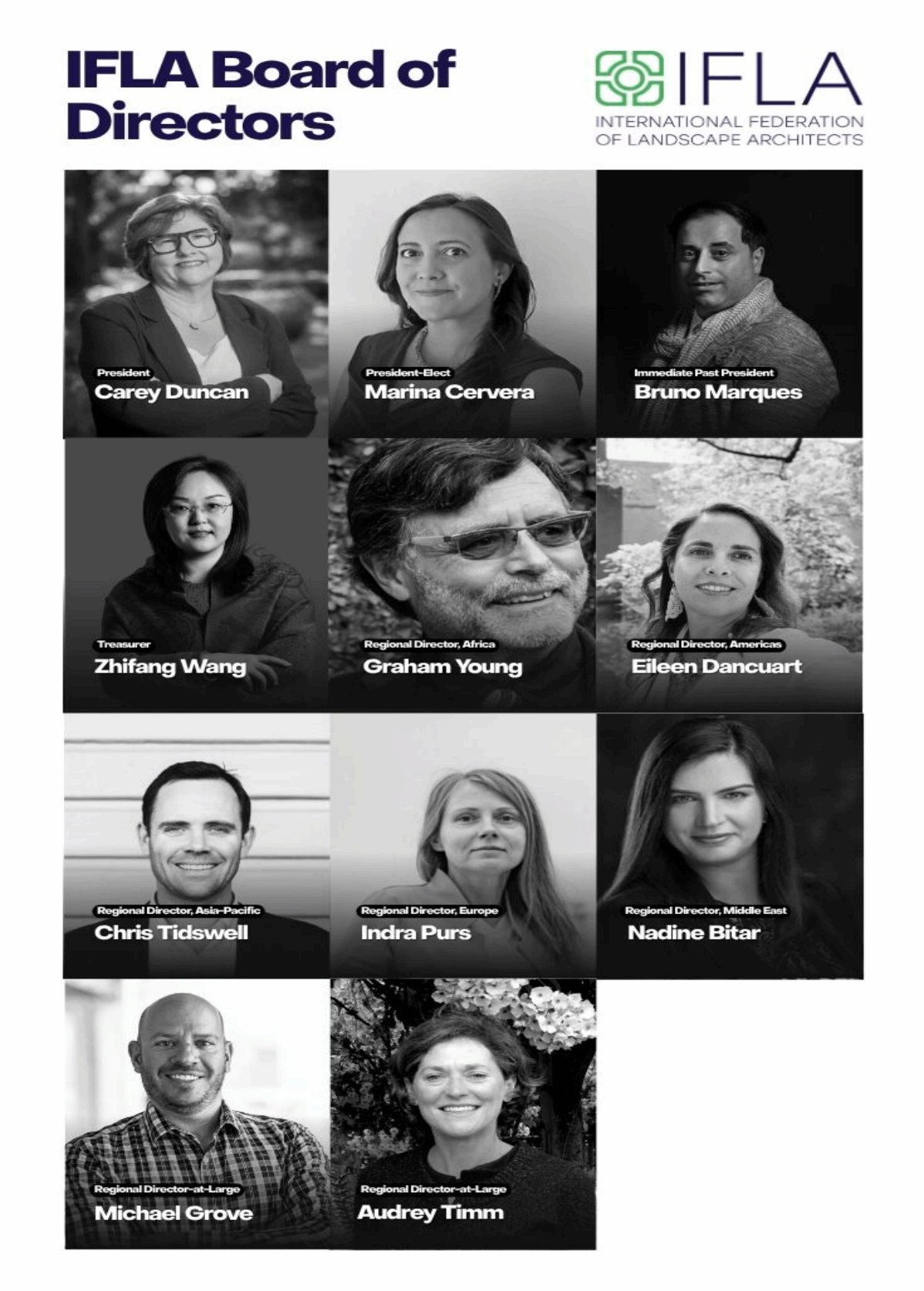
List of Members and Positions of the First IFLA Board of Directors
Throughout the conference, Wang Zhifang participated in a series of important meetings of the IFLA Executive Committee, Board of Directors, and World Council; attended numerous key events, including the World Congress and international award ceremonies; and engaged in exchanges with overseas professional organizations such as the Macau Society of Landscape Architecture, actively promoting communication and collaboration among landscape architecture industry organizations in various countries and regions.
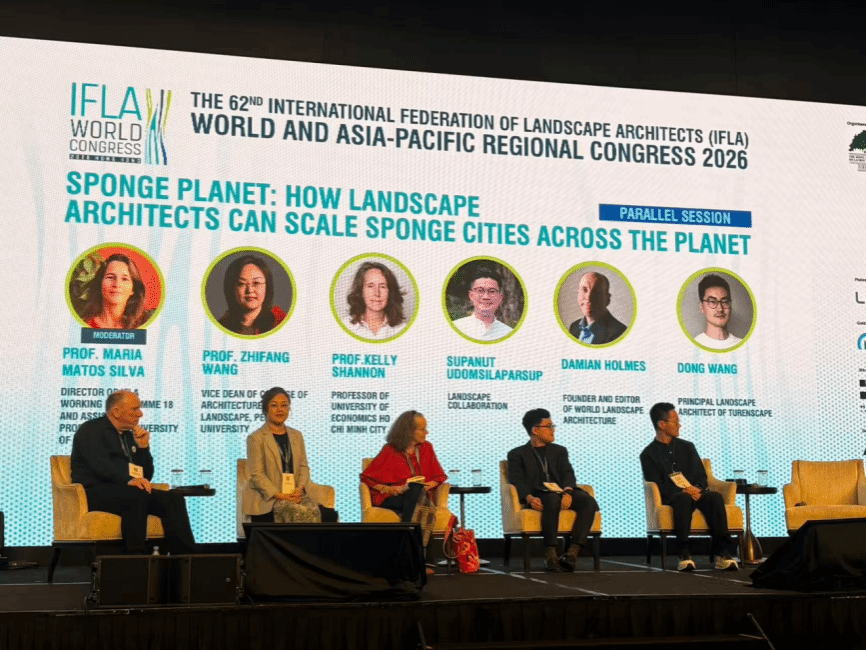
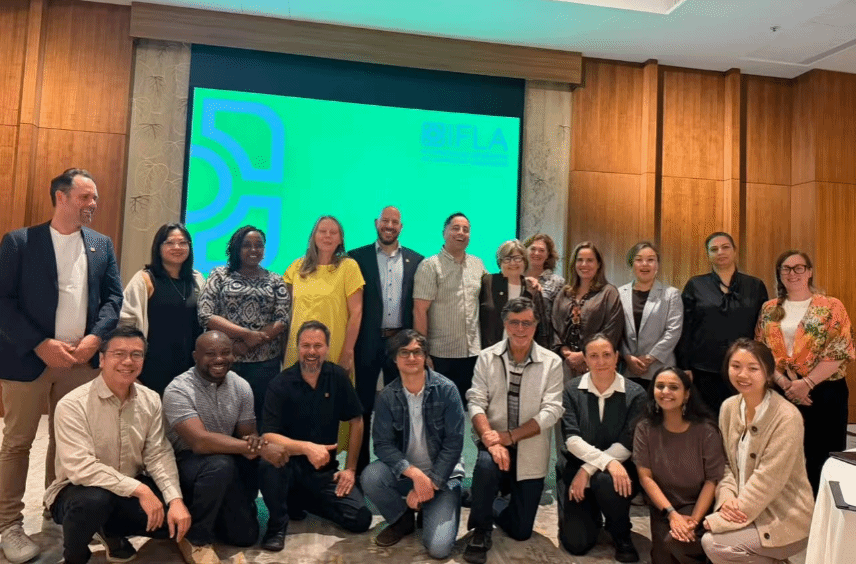
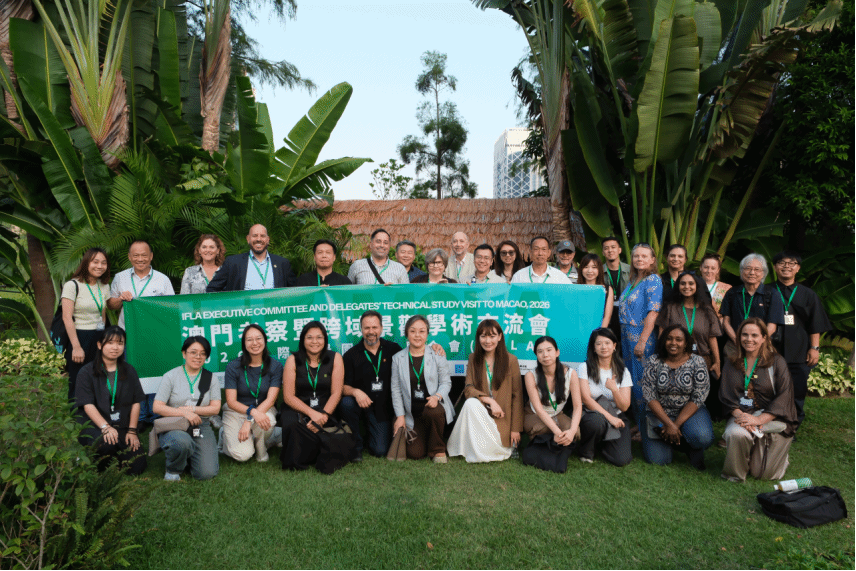
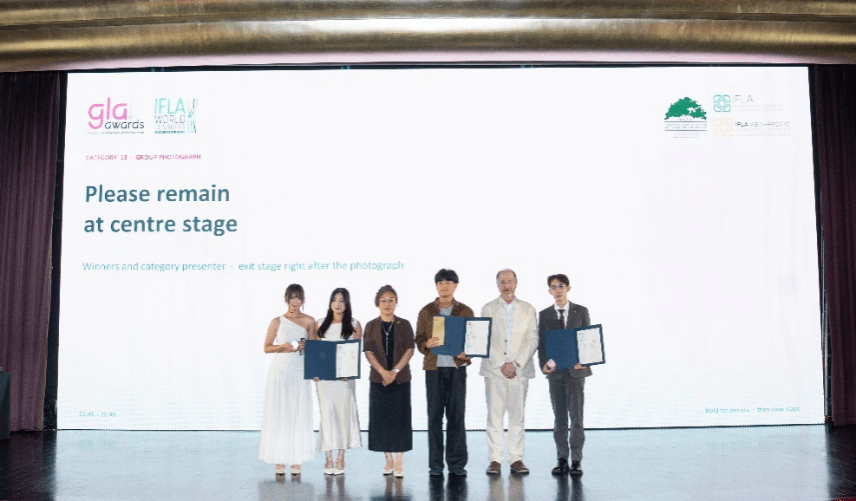
Wang Zhifang Attends IFLA Meetings and Award Ceremonies
At the IFLA Council meeting, Wang Dong—an alumnus of the Academy, Chief Planner at Turenscape, and Director of the Center for Ecological Urban Design—reviewed Turenscape’s three decades of exploration, focusing on Professor Yu Kongjian’s five key questions regarding development and nature, urban aesthetics, ecological restoration, future human settlements, and climate resilience. He explained how to use “anti-planning” and ecological security frameworks to define the boundaries between development and conservation; how to re-examine the value of natural and productive landscapes through “Big Foot Aesthetics”; how to achieve stormwater retention, water purification, and reuse through the “Sponge City” approach; and, using the example of South Xi River in Huangshan, how a lifestyle in symbiosis with nature can drive rural revitalization. Focusing on the final and most critical issue of climate resilience, Wang Dong drew on TuRen Design’s ongoing overseas projects to elaborate on the vision of moving from “Sponge Cities” to a “Sponge Planet.”
Wang Dong Attends IFLA Council Meeting
Wang Chenshuo, a master’s student at the College, delivered a presentation titled "How Water Expands Parks: Integrating Machine Learning and Outlier Analysis in High-Density Cities." The presentation focused on how water bodies can expand people’s spatial experiences in the context of limited park land in high-density cities: water surfaces can extend lines of sight, soften boundaries, and connect walking routes, making limited land appear more open. Its significance lies in shifting the focus of design from “securing more area” to “making existing spaces feel more open,” thereby providing insights for the integration of blue and green spaces and the development of healthy cities.
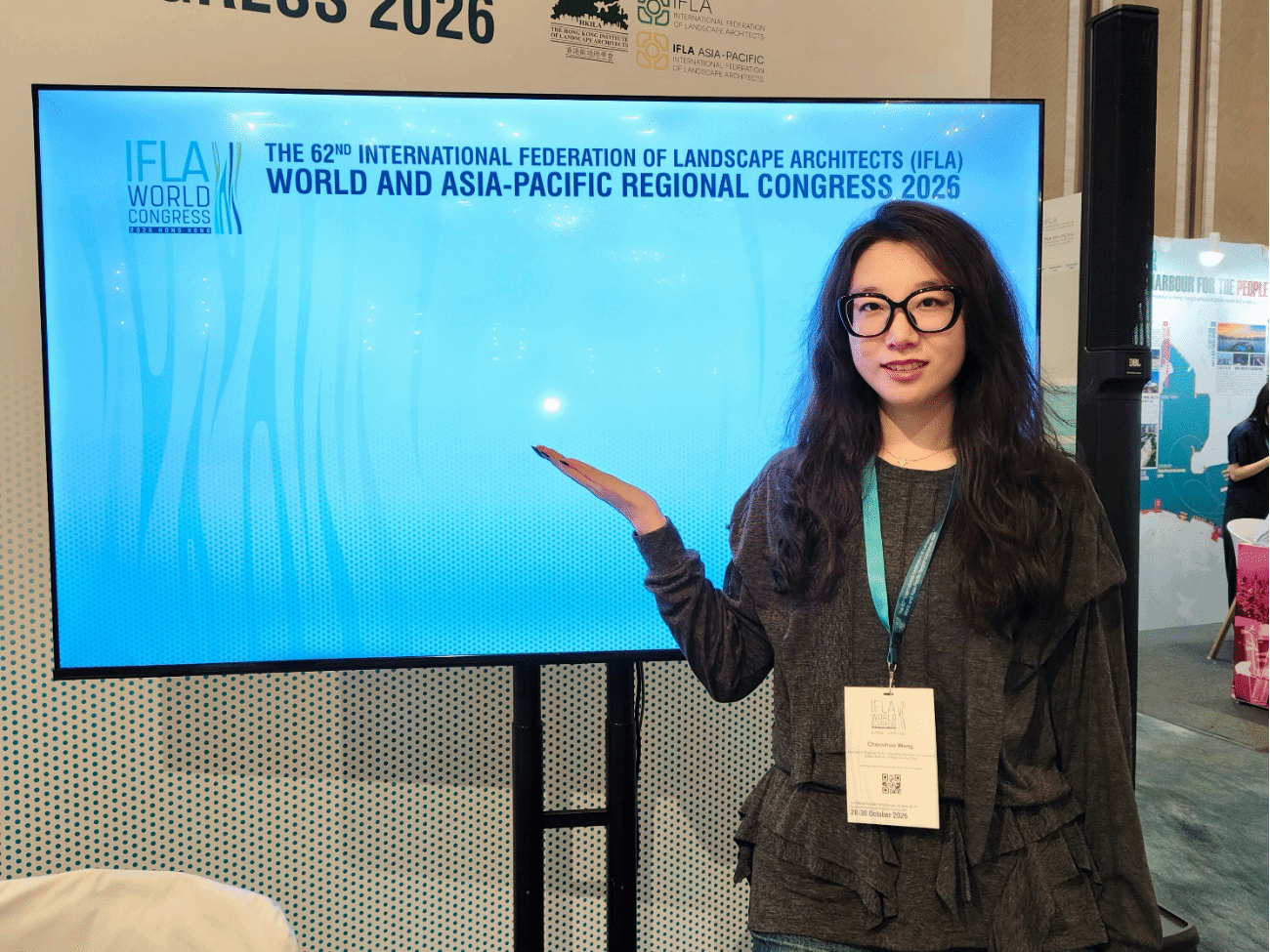
Wang Chenshuo Presents at the IFLA Conference
IFLA is an internationally influential professional organization in the field of landscape architecture. Founded in 1948, it comprises professional landscape architecture associations from more than 80 countries and regions, representing over 100,000 landscape architects worldwide. IFLA is committed to advancing the profession of landscape architecture, fostering international cooperation, and addressing global issues such as climate change, biodiversity conservation, and sustainable urban development. As a Standing Committee member, Board member, and Treasurer, Wang Zhifang will participate in IFLA’s overall strategic governance, with a particular focus on annual budgeting and financial planning, risk oversight, and ensuring the organization’s long-term financial sustainability. This role involves not only financial oversight but also providing decision-making support at the organizational strategic level regarding resource allocation, risk management, and global business development. This appointment fully demonstrates the international industry’s recognition of China’s professional capabilities in landscape architecture and expands China’s channels for participating in decision-making on global landscape architecture affairs.
Currently, landscape architecture is playing an increasingly critical role in addressing major global issues such as climate change, biodiversity conservation, and the achievement of the United Nations Sustainable Development Goals, underscoring the importance of collaborative governance within the international professional community. Wang Zhifang’s assumption of this key position at IFLA will further promote in-depth dialogue between China’s landscape architecture community and global peers, establishing a higher-level international exchange platform for education, research, and practice in China’s landscape architecture field. The College will seize this opportunity to continuously expand international cooperation, actively engage in global landscape architecture affairs, contribute Chinese insights, and support the high-quality development of the global landscape architecture profession.
Written by Wang Ying
Reviewed by Li Dihua , Wang Zhifang
