From “Sponge City” to “Earth's Kidney”: Brazil's "Móbile" Magazine Reflects on Kongjian Yu and the Unfinished Journey of "Sponge Earth"
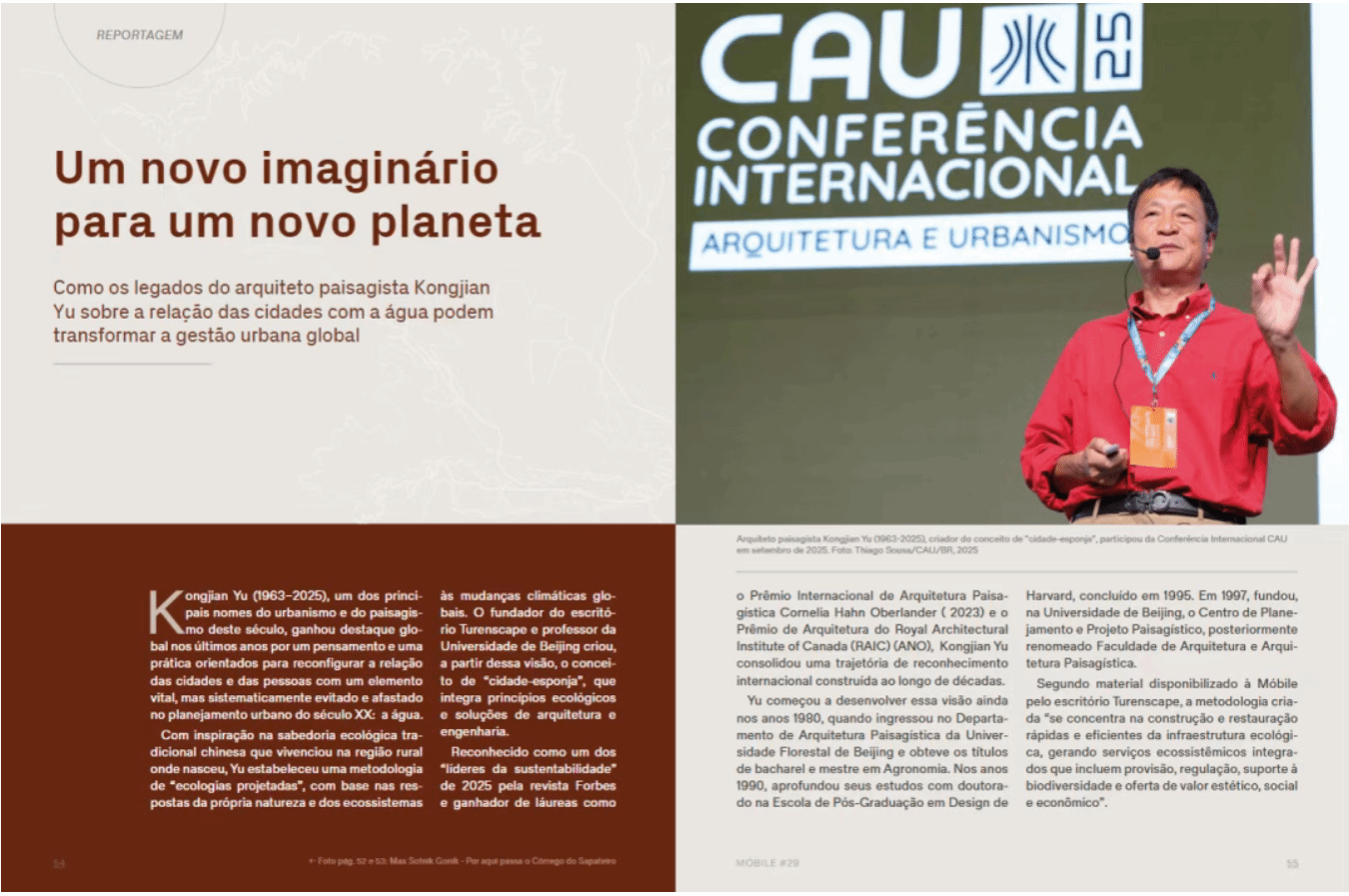
Last weekend, Issue 29 of "Revista Móbile", published by the São Paulo Council of Architecture and Urban Planning (CAU/SP), was officially released. Titled "Um novo imaginário para um novo planeta" (A New Imagination for a New Planet), this special issue pays deep tribute to Peking University professor and landscape architect Kongjian Yu and the “Sponge City” theory he pioneered.
The "Art of Survival" Rooted in Millennia of Agricultural Wisdom
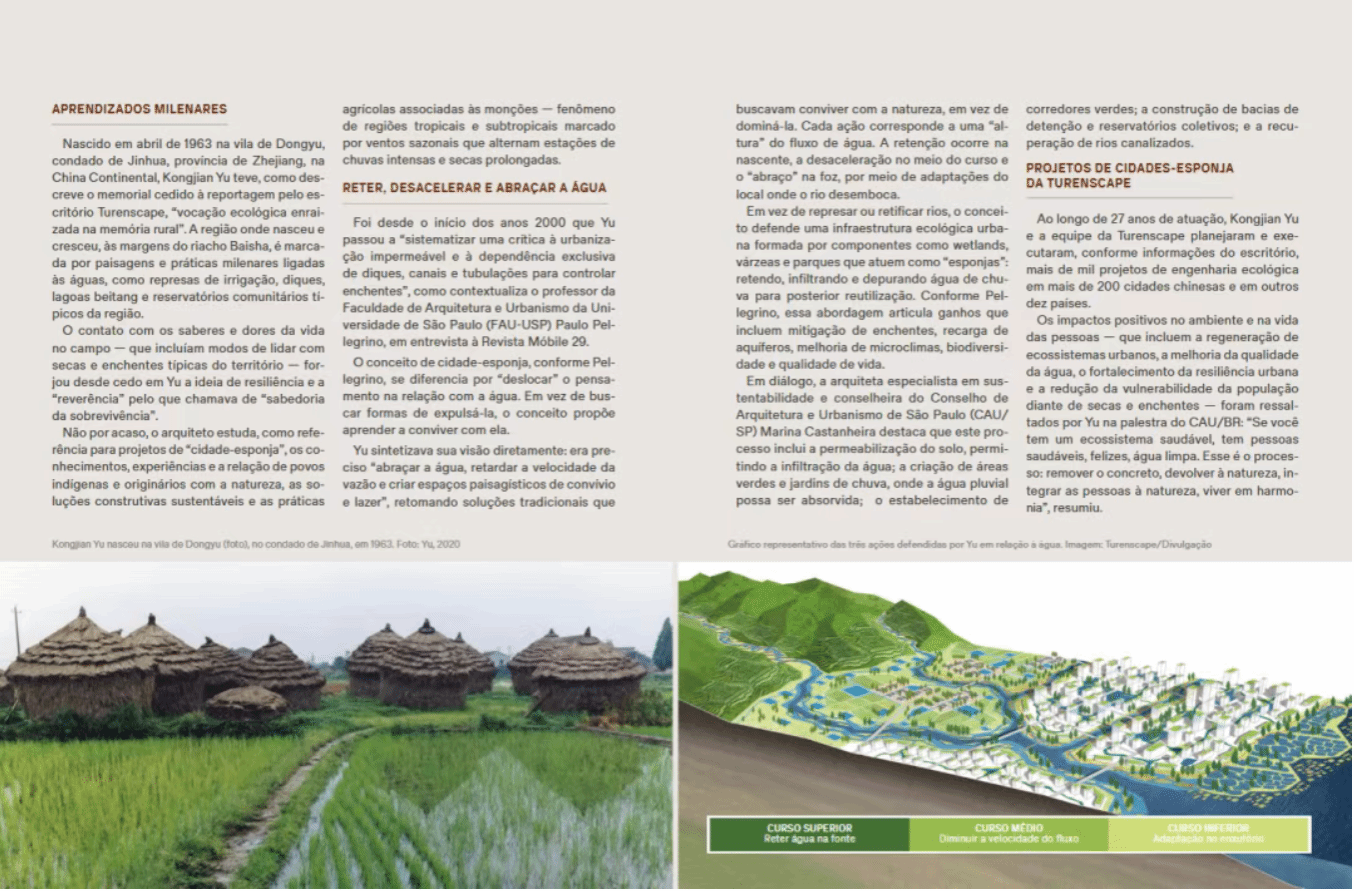
Yu Kongjian's ecological perspective did not arise out of thin air. In April 1963, he was born in Dongyu Village, Jinhua City, Zhejiang Province, China, and grew up on the banks of the Baisha River. The area still preserves ancient irrigation dams, embankments, and community reservoirs—engineering marvels created by his ancestors to cope with the alternating droughts and floods of the monsoon region. These structures planted in his heart the seed of “coexisting with nature” rather than “fighting against it.” This “ecological gift rooted in rural memory” was distilled by him into “the art of survival” and has permeated his academic work and practice throughout his life.
"Retain, Slow Down, Embrace": Redefining the Relationship Between People and Water
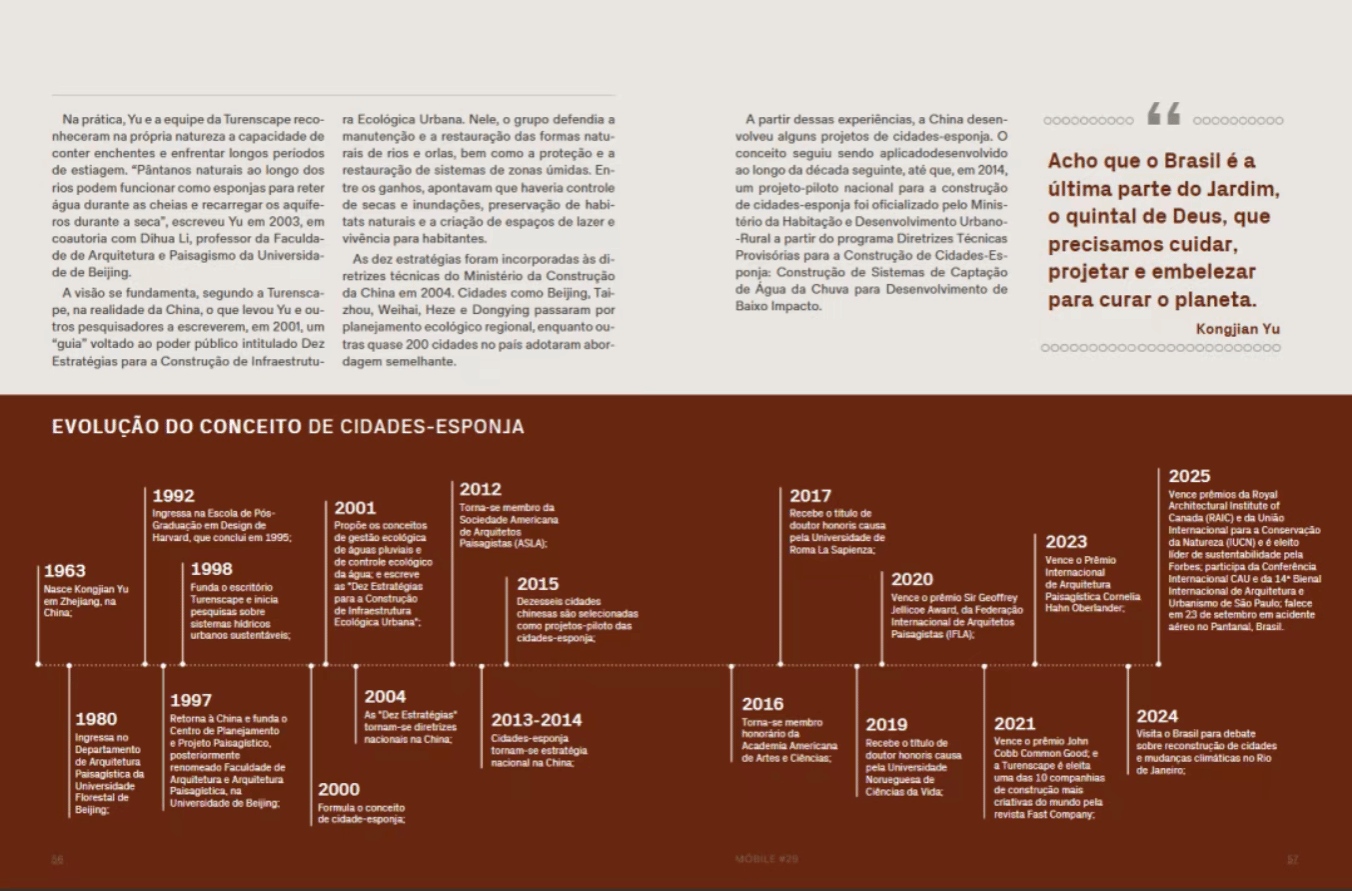
This issue of the magazine draws on the insights of Paulo Pellegrino, a professor at the School of Architecture and Urban Planning (FAU-USP) at the University of São Paulo, to systematically explain the essence of the “sponge city” concept: it is not merely a drainage project, but rather a philosophical "shift" — —one that rejects the old mindset of rapidly draining water via levees and pipes, and instead advocates for cities to actively “embrace” rainwater through ecological infrastructure such as wetlands, green corridors, rain gardens, and permeable paving, thereby achieving a three-tiered regulation system of “retention at the source—deceleration along the way—embrace at the end.”
This model not only alleviates urban flooding but also delivers multiple ecological benefits, including groundwater recharge, improved microclimates, enhanced biodiversity, and self-purification of water bodies. As Yu Kongjian stated in his speech at the CAU/BR conference in Brasília in September 2025: “If you have a healthy ecosystem, you have healthy people, happy people, and clean water. This process is about—returning to nature, integrating people into nature, and living in harmony.”
Best Practices: The Metamorphosis of Shanghai's Houtan Park "Industrial Rust Belt"
The magazine provides an in-depth analysis of Yu Kongjian's signature project—Shanghai World Expo Houtan Park. This narrow strip of abandoned land along the Huangpu River (approximately 1.7 kilometers long and 30 to 80 meters wide) was once home to steel mills and shipyards, and its water quality was classified as below Class V. Faced with the urgent task of developing the site to support the 2010 World Expo, Yu Kongjian did not opt for traditional engineering methods but instead created a 1.7-kilometer linear wetland system:
Ecological Purification: Introducing a variety of wetland plants to treat polluted river water saved approximately $5 million compared to traditional water treatment methods;
Revival of millennia-old agricultural wisdom: Terraces inspired by ancient local rice paddies were designed to take advantage of elevation differences, slowing water flow, purifying water quality, and enriching the landscape's depth;
Revitalization of Industrial Heritage: Abandoned industrial structures were preserved and repurposed as hanging gardens and artistic sculptures, with a network of walking paths connecting the community.
Houtan Park demonstrates that ecological infrastructure is not merely a "green sponge", but a multifaceted public space that integrates aesthetics, historical memory, and social services.
“Sponge Earth”: Turning Our Attention to the Pantanal
Yu Kongjian believes that Brazil, with its abundant water resources, vast land, and diverse biotic communities, serves as a natural laboratory for putting his theory into practice. He refers to the Pantanal wetlands as "the kidneys of the Earth" and "the last Eden", where the natural water systems perfectly embody his "sponge" concept.
In September 2025, after attending the CAU/BR Congress in Brasília and the São Paulo International Architecture Biennial, Yu Kongjian traveled to the Pantanal with documentary director Luiz Ferraz and cinematographer Rubens Crispim Rubens Crispim Jr. to the Pantanal to film scenes for the documentary "Planeta Esponja"(Sponge Planet). Production of the documentary began in March 2025 with the first interview with Yu Kongjian in China, aiming to elevate his "Sponge City" concept into a global vision of a "Sponge Earth."
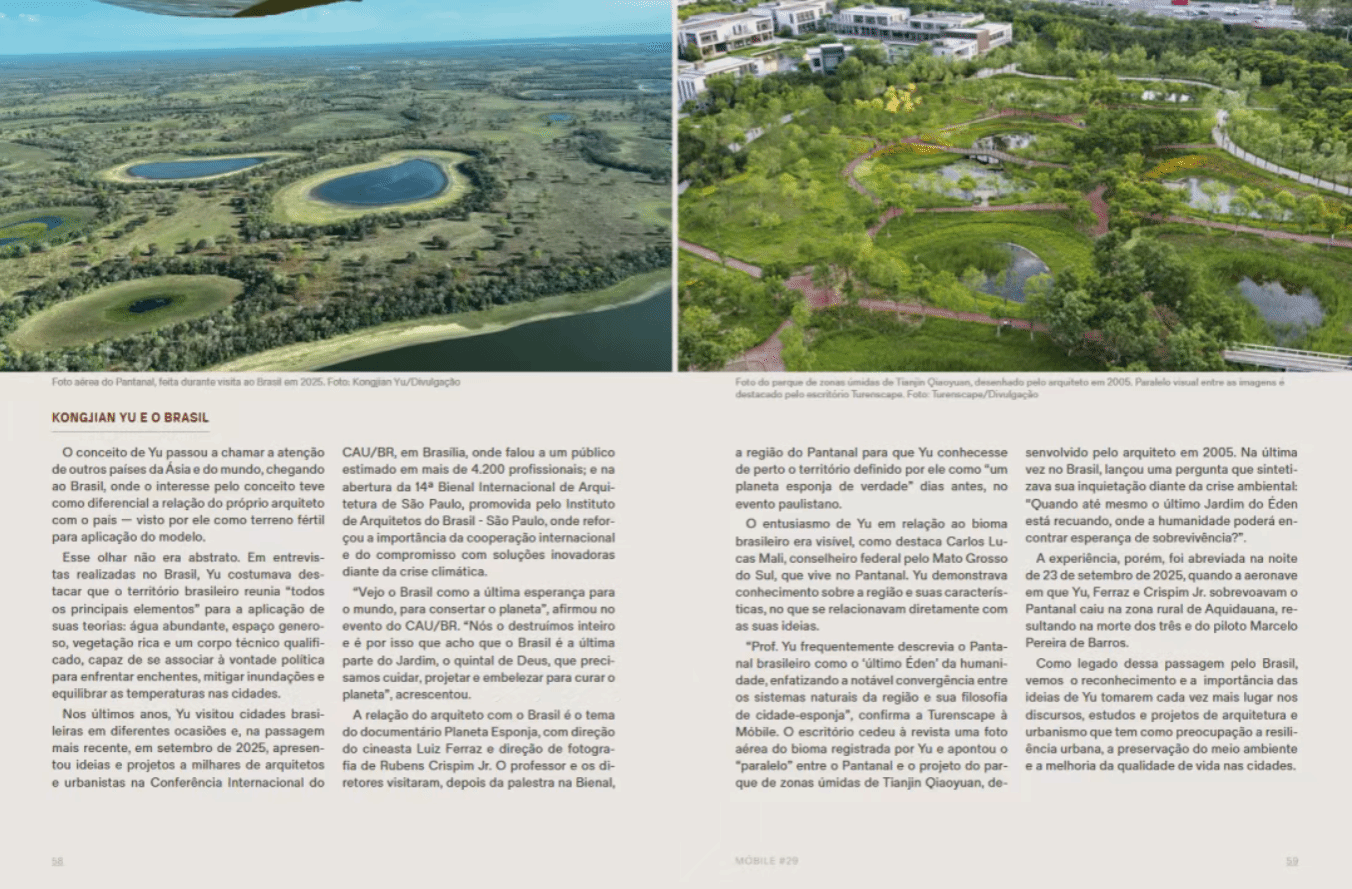
Building a New Vision for a New Planet
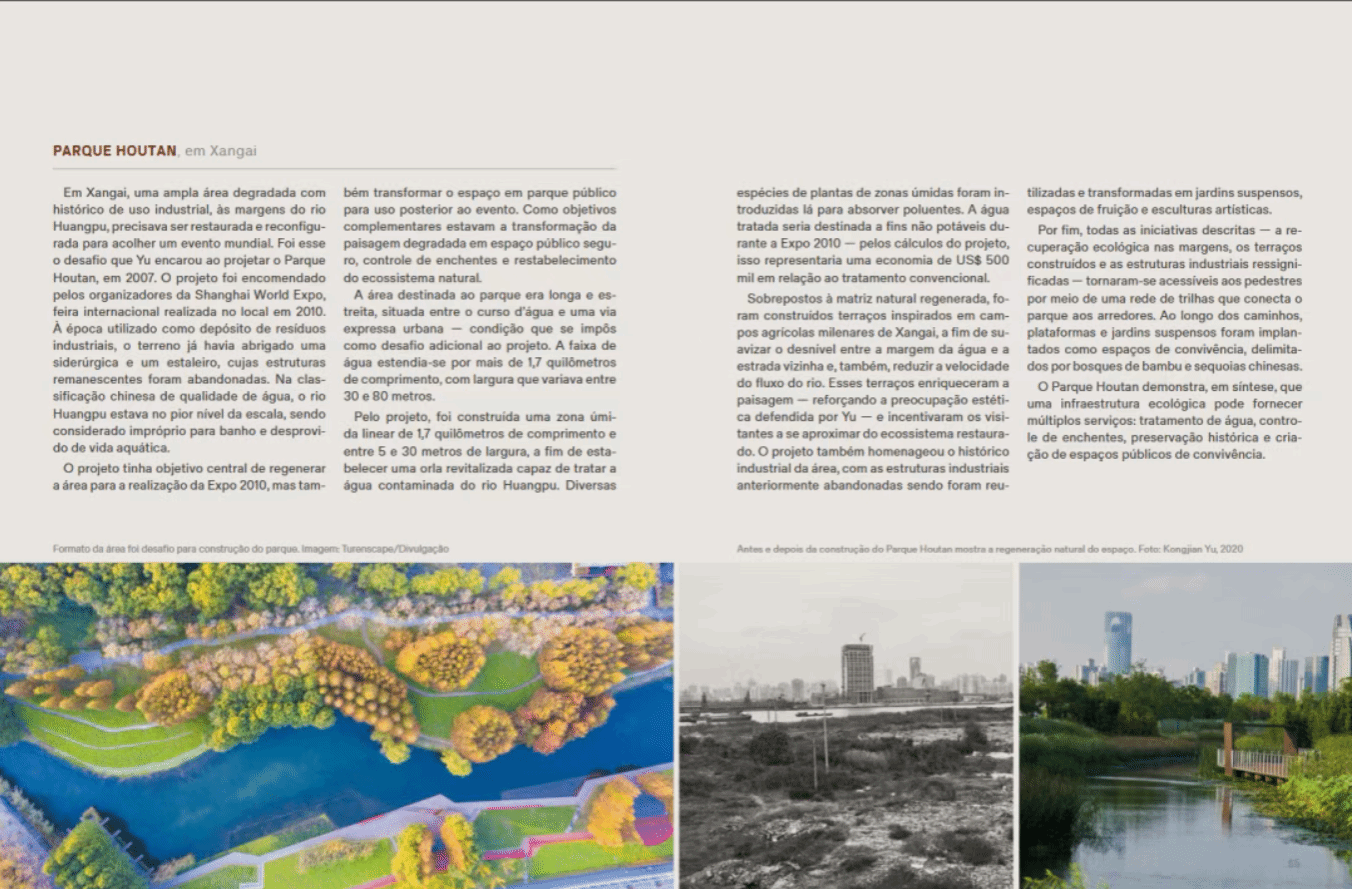
Yu Kongjian's thinking did not stop there. In the 27 years since its founding, Turenscape has completed over a thousand ecological engineering projects in more than 200 cities across China and in more than 10 countries overseas. Today, a large group of outstanding designers within the team—who carry on his legacy—are taking on this weighty mission. They continue to advance the grand vision of "Sponge Earth", deeply integrating cutting-edge tools such as artificial intelligence (AI) with ecological design, allowing the "art of survival" to take root and flourish across a broader landscape. This is precisely about building a new imagination for a new planet—a future vision where water and cities coexist in harmony, and where humanity and nature heal one another.
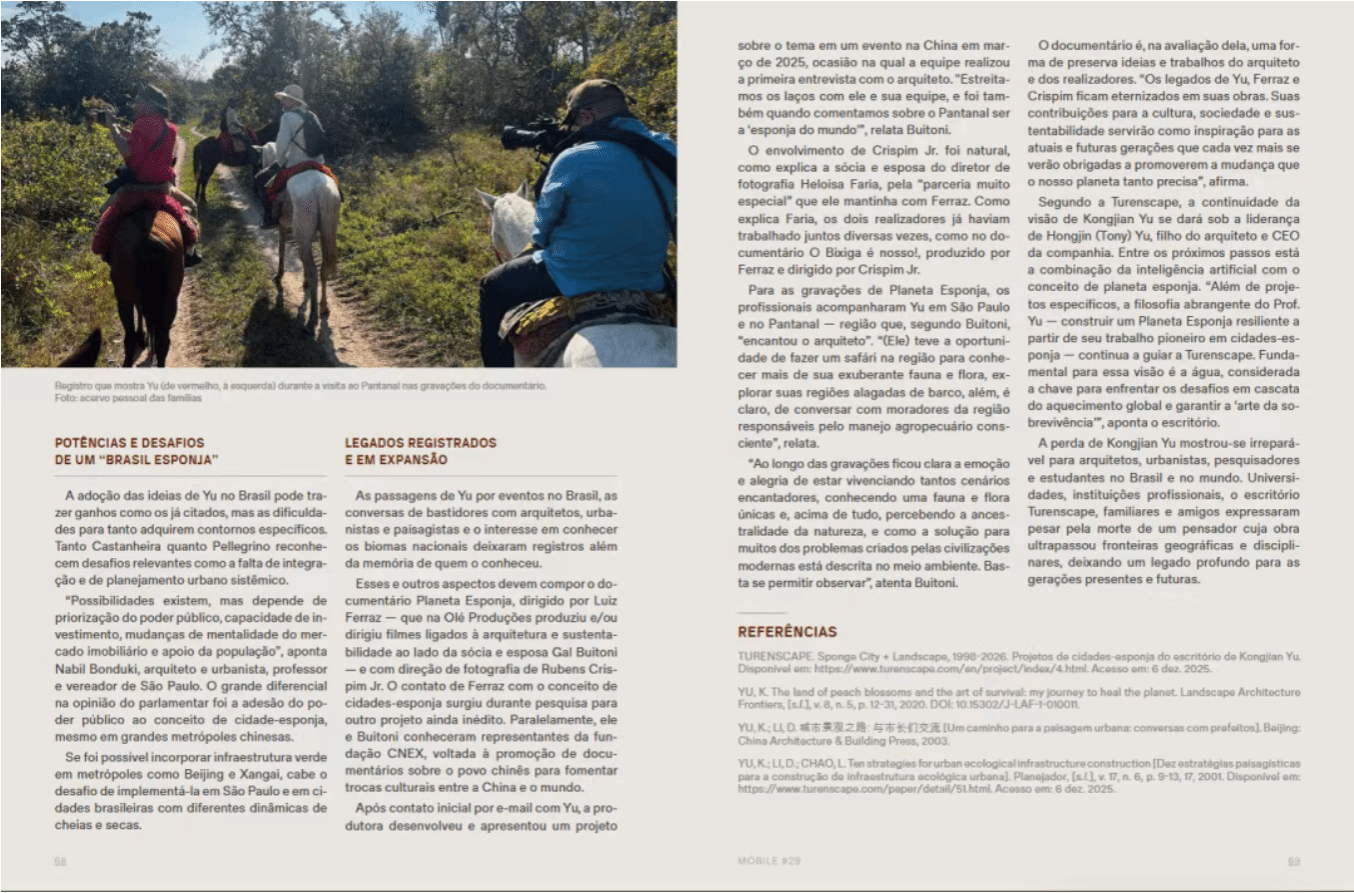
Issue 29 of "Revista Móbile", titled "Um novo imaginário para um novo planeta", serves both as a systematic archive of Yu Kongjian's academic thought and as a testament to his deep friendship with Brazil. As the magazine states: "Their legacy will live on in their work, providing the inspiration and courage needed by present and future generations to navigate the Earth's dramatic changes."
