Exclusive Interview with Professor Yu Kongjian of Peking University: Enhancing Urban Resilience to Climate Challenges through Nature-Based Solutions
As the primary hubs for production and daily life, cities have increasingly become the focal point for mitigating and adapting to climate change. Enhancing urban resilience to reduce the adverse impacts of natural and social disasters has emerged as a key priority. Recently, the Decision of the Central Committee of the Communist Party of China on Further Comprehensively Deepening Reform and Advancing Chinese Modernisation (hereinafter referred to as the Decision) emphasised establishing sustainable urban renewal models and policy frameworks. This includes strengthening the construction of underground utility tunnels and upgrading ageing pipelines, while deepening initiatives to enhance urban safety and resilience.
Presently, how might we reconstruct spatial patterns that harmonise cities with nature? How should nature-based urban ecological resilience be manifested? What implications does enhancing urban resilience hold for cities' responses to climate change? To address these questions, China Environment News interviewed Professor Yu Kongjian from Peking University's School of Architecture and Landscape Architecture.
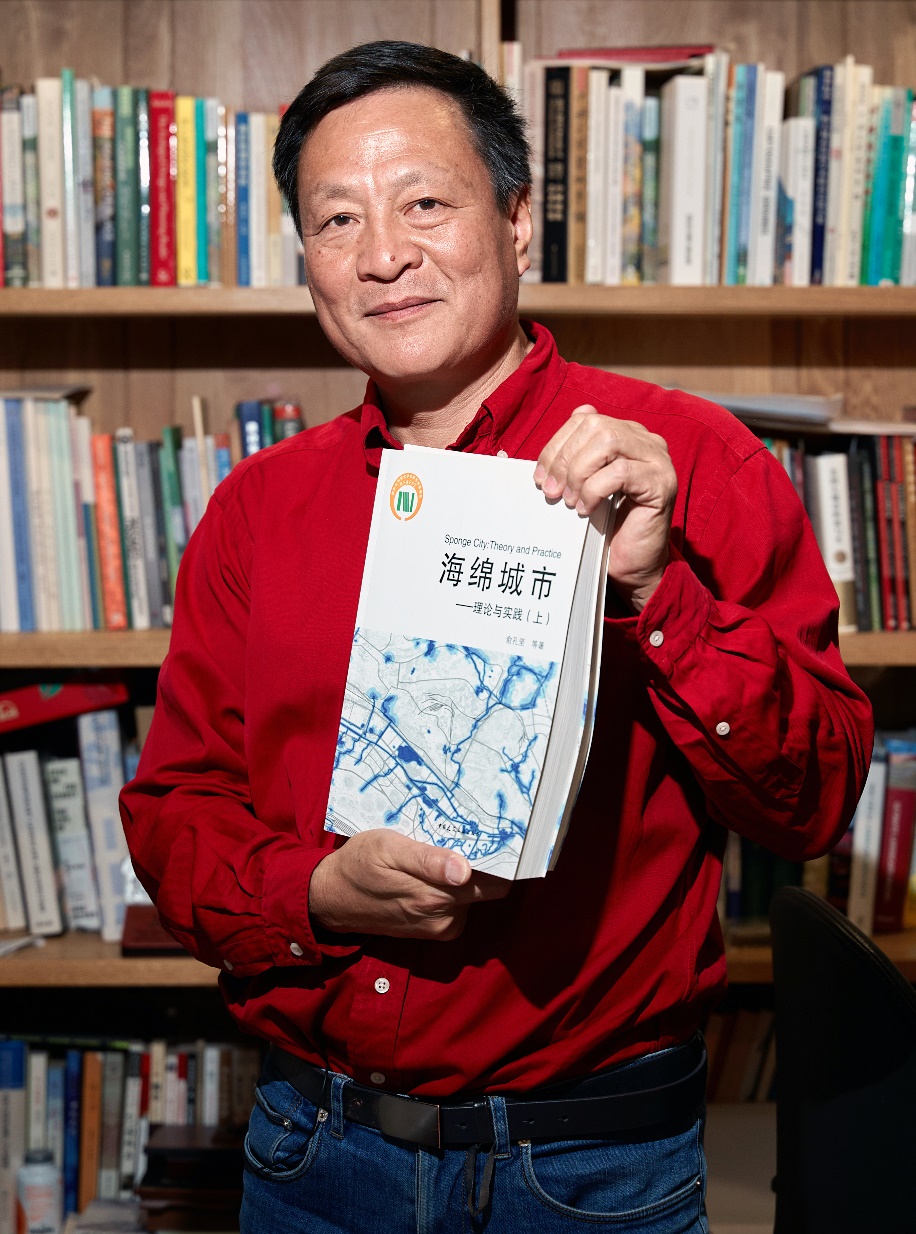
China Environment News: The Decision previously mentioned deepening the urban safety and resilience enhancement initiative. One of the four major tasks outlined in the Five-Year Action Plan for Deepening the Implementation of the People-Centred New Urbanisation Strategy, issued by the State Council, is the urban renewal and safety resilience enhancement initiative. In this regard, what significance do you believe the current emphasis on ‘urban resilience’ holds?
Yu Kongjian: With the rapid advancement of urbanisation, cities face increasingly complex and volatile challenges, including extreme weather events triggered by climate change, frequent natural disasters, resource scarcity, and social risks arising from population density. Against this backdrop, enhancing urban resilience has become pivotal to addressing these challenges.
Firstly, emphasising ‘urban resilience’ signifies that we must equip cities with stronger coping and recovery capabilities, particularly in the face of natural disasters and climate change. By optimising urban infrastructure—particularly nature-based ecological systems—we can significantly bolster disaster prevention and mitigation capabilities, thereby reducing the impact of extreme events on urban functions and residents' lives. Establishing a more resilient urban framework enables us to manage climate-related phenomena such as flooding and urban heat islands with greater composure, ensuring swift recovery and resumption of operations post-disaster.
Secondly, enhancing urban resilience is intrinsically linked to urban renewal. During this process, we should fully integrate green infrastructure, optimise spatial layouts and functional configurations to bolster both ecological and social resilience. For instance, constructing ecological infrastructure like sponge cities can effectively mitigate urban flooding, improve microclimates, and enhance water resource efficiency, thereby advancing sustainable urban development.
More significantly, emphasising ‘urban resilience’ embodies our people-centred development philosophy. Enhancing urban resilience fundamentally safeguards every resident's life safety and elevates their quality of life. In advancing new-type urbanisation, ensuring cities can effectively respond to diverse risks lies at the core of achieving people-centred urbanisation that fulfils citizens' aspirations for a better life.
China Environment News: What are the defining characteristics of nature-based ecological resilience within the concept of ‘urban resilience’? How does the utilisation of natural ecosystems offer advantages and irreplaceable benefits compared to traditional engineering infrastructure?
Yu Kongjian: Nature-based ecological resilience within “urban resilience” possesses unique systemic and comprehensive qualities, granting it irreplaceable advantages over traditional engineering infrastructure in addressing climate change and enhancing urban resilience. By integrating the multifaceted functions of ecosystems, nature-based solutions not only deliver integrated ecosystem services unattainable through singular engineering measures but also provide long-term safeguards for sustainably responding to environmental shifts and societal demands.
The defining characteristic of natural ecosystems lies in their systemic and holistic nature. Unlike conventional “grey” infrastructure, natural ecosystems simultaneously deliver multiple ecological services, combining both mitigation and adaptation functions. They not only address extreme weather events caused by climate change in the short term but also improve overall urban environmental quality over the long term. For instance, urban wetlands, forests, and green spaces not only mitigate floods, droughts, and heat island effects but also reduce greenhouse gas emissions through carbon sequestration while enhancing urban biodiversity. The sponge city concept, by increasing green areas and water bodies, absorbs and stores rainwater to alleviate flooding, releases stored water during droughts to purify water quality and nurture habitats, thereby helping cities adapt to climate change and reduce maintenance costs.
By harnessing ecological forces, we can achieve more ecologically liveable, efficient, attractive, and sustainable urban development models. Therefore, in enhancing urban resilience, nature-based ecological resilience is not only essential but also the inevitable path to long-term sustainable development.
China Environment News: Today, in addressing climate change, numerous cities have issued urban climate adaptation action plans, and many have commenced relevant urban transformation initiatives. In your view, how should urban development adapt to climate change? What key aspects require attention in this process?
Yu Kongjian: To effectively address climate change and achieve genuine sustainable development in urban construction, we must advance three dimensions simultaneously: mitigation, adaptation, and societal transformation.
Among these, mitigation constitutes the fundamental measure for controlling climate change and represents the primary step in addressing it. Currently, numerous cities have implemented measures such as energy structure adjustments, building energy efficiency upgrades, and transport system optimisation. However, relying solely on mitigation measures is insufficient to fully address the diverse challenges posed by climate change.
Adaptation, meanwhile, involves enhancing a city's capacity to withstand climate change impacts, ensuring swift recovery of normal operations following climate-related disasters. For instance, the development of sponge cities represents one such adaptation strategy. Simultaneously, I contend that the sponge city concept should not be confined to urban green spaces and small-scale applications. It ought to be expanded to encompass the levels of ‘sponge nation’ and ‘sponge watershed,’ and even extend to a sponge Earth.
Within the ‘sponge nation’ framework, the natural environment and land use of the entire country require integrated consideration. Through systematic planning and management, we can achieve ecological, efficient regulation, storage, and utilisation of water resources, thereby mitigating flood threats and improving the ecological environment. The ‘sponge watershed’ approach requires treating entire river basins as integrated systems. By coordinating water resource management and ecological conservation across upstream and downstream regions based on natural processes, the overall resilience of the watershed is enhanced. Implementing this on a broader scale enables more effective responses to climate change, elevating the nation's ecological security and sustainable development capacity.
Beyond this, I contend that climate change is not merely an environmental issue but a profoundly social one. Therefore, a fundamental transformation of production and lifestyles – a ‘social revolution’ centred on green living – is indispensable. This encompasses changes across education, culture, policy and other domains, constituting a long-term strategy for addressing climate change. I believe the core of social change lies in its capacity to guide people towards a fundamental shift in their relationship with nature, fostering greater harmony between humanity and the natural world.
China Environment News: You mentioned sponge cities earlier. We understand you have dedicated the past three decades to advancing the planning and engineering practice of sponge cities and sponge landscapes. In your view, what lessons has sponge city development offered for enhancing urban ecological resilience? Amidst the current global surge in extreme weather events, how has sponge city construction transformed urban development and people's lives?
Yu Kongjian: The development of sponge cities has provided crucial insights for enhancing urban ecological resilience. Its core lies in a systematic approach that addresses a range of issues arising from urbanisation – including water scarcity, flooding, non-point source pollution, urban heat islands, and the management of public spaces. This is achieved through the strategy of ‘decentralised infiltration and storage at the source, deceleration and energy dissipation during the process, and resilient adaptation at the end, while providing space for water.’ By restoring and reinforcing natural hydrological cycles, this approach enables cities to adapt more effectively and mitigate the impacts of water-related disasters when confronting extreme weather and climate change challenges.
Against a backdrop of increasingly frequent extreme weather globally, sponge cities significantly enhance urban flood resilience through nature-based stormwater management. This approach compensates for the limitations of traditional “grey” infrastructure while simultaneously improving ecosystem services. Sponge city development markedly enhances urban microclimates, effectively mitigates the urban heat island effect, reduces soil erosion and pollution levels, and provides additional recreational spaces. These outcomes collectively foster more liveable cities, delivering comprehensive ecological, social, and economic benefits.

Meisha River in Haikou City, Hainan Province, has been transformed through ecological design, converting grey infrastructure into resilient green infrastructure. (Source: Yu Kongjian)
China Environment News: In your view, what new opportunities have emerged from advancing initiatives such as enhancing urban resilience and building climate change adaptation measures? What recommendations do you have for future development in this area?
Yu Kongjian: In my opinion, the opportunities within enhancing urban resilience and climate change adaptation extend beyond technological innovation and industrial development to encompass transformations in social governance models.
Firstly, technological innovation presents a significant opportunity. As understanding of climate change deepens, an increasing array of green technologies and solutions has emerged—such as the widespread adoption of renewable energy, the promotion of smart city technologies, and innovations in nature-based solutions. The application of these technologies not only effectively reduces carbon emissions and improves urban environmental quality but also injects new momentum into economic development, creating substantial green employment opportunities.
Secondly, climate adaptation initiatives are driving innovation in governance models. Building resilient cities requires close collaboration between governments, businesses, communities, and citizens. This multi-stakeholder approach enhances a city's overall adaptive capacity, better equipping it to meet future challenges. Simultaneously, broad public engagement and heightened awareness will promote more sustainable lifestyles, fostering a more resilient and adaptive society.
Regarding future urban development, I believe we must first deepen nature-based solutions. These approaches deliver long-term ecological and economic benefits while fortifying cities against uncertainty.
Secondly, planning and design must prioritise foresight and flexibility. Urban blueprints should incorporate sufficient space and resilience to accommodate diverse future climate scenarios.
Thirdly, attention must be paid to social and cultural transformation. Enhancing public awareness and altering lifestyles – encompassing values, aesthetics, travel habits, and daily routines – are crucial to bolstering urban resilience. Through education and advocacy, more citizens can understand climate change impacts and mitigation measures, actively participating in related development efforts. This will lay a solid societal foundation for building resilient cities and adapting to climate change.
Author: Lü Wangshu, China Environmental News
Editor: Zhu Liangliang
