Zhang Yongli, President of the China Scenic and Historic Interest Areas Association, and His Delegation Visit Our College for a Research Tour
On February 26, Zhang Yongli, President of the China Scenic and Historic Interest Areas Association, and his delegation visited our institute for a research tour. They engaged in in-depth discussions with Professor Yu Kongjian, the institute’s president, and others on topics including “Beautiful China” and the advancement of ecological civilization, the planning, design, and sustainable development of scenic and historic interest areas, as well as the role of these areas in driving rural revitalization and all-for-one tourism.
During the exchange, Zhang Yongli noted that the Party Central Committee and the State Council attach great importance to ecological conservation and construction, and have achieved remarkable accomplishments in the field of nature conservation that have attracted worldwide attention. In today’s context, tourism has become an increasingly widespread way of life. How to effectively transform and utilize the ecological value of nature reserves to benefit the people and society at a high level, thereby enabling the public to enjoy a better life, is a historical question that practitioners in the scenic area sector must deeply contemplate. Within China’s system of nature reserves, scenic areas play a prominent role in cultural and tourism functions. We must not only focus on “lucid waters and lush mountains” but also on “mountains of gold and silver,” comprehensively, deeply, and accurately putting the “Two Mountains” theory into practice; we must not only thoroughly implement Xi Jinping’s Thought on Ecological Civilization and fully leverage our ecological strengths but also thoroughly implement Xi Jinping’s Thought on Culture and fully leverage our cultural strengths, deeply tapping into the comprehensive service functions of scenic areas to enable them to play a greater role in China’s modernization. As professionals working in scenic areas, we are now in an era of widespread tourism, which presents a prime opportunity to realize our ambitions and make significant contributions. Zhang Yongli emphasized that Peking University’s School of Architecture and Landscape Architecture possesses high-level technical expertise and cutting-edge concepts, with a wealth of achievements in planning and design. By leveraging the Association’s platform advantages and Peking University’s technical strengths, both parties can form a powerful partnership to accomplish much.
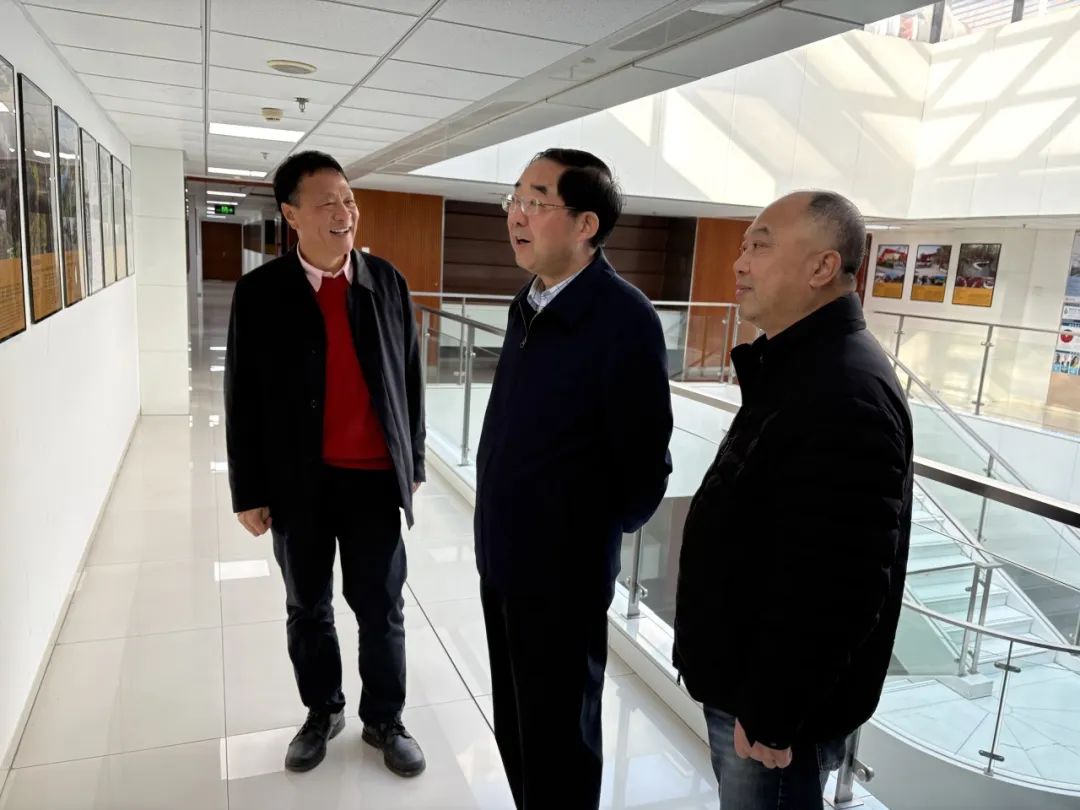
Yu Kongjian introduced the academic research and planning and design achievements of Peking University’s College of Architecture and Landscape since its establishment in areas such as “sponge city” initiatives combined with landscape design, architecture, urban planning, and bridges and structures. He also shared insights on the role and value of scenic areas in building a “Beautiful China” and driving rural revitalization, as well as on issues such as ecological restoration, the creation of new-quality productive forces, and the promotion of the transformation of ecological service values, engaging in an in-depth exchange with the visitors.
Source :China Scenic and Historic Areas Association
Edited by Zhu Liangliang
