Professor Yu Kongjian Delivers Keynote Address at the 61st IFLA World Congress
From 10 to 12 September 2025, the 61st International Federation of Landscape Architects (IFLA) World Congress convened in Nantes, France, under the theme ‘Guiding Landscapes’. Experts, scholars, designers, educators and policymakers from around the world gathered to explore the role of landscape architecture in addressing climate change and driving societal transformation. Professor Yu Kongjian, Member of the Climate Change Committee of the Chinese Society of Landscape Architecture, Vice Chairman of the China Urban Science Research Association, Director of the Landscape Architecture and Beautiful China Committee, and Founding Dean of the School of Architecture and Landscape Architecture at Peking University, was invited to deliver a keynote address that garnered significant attention.
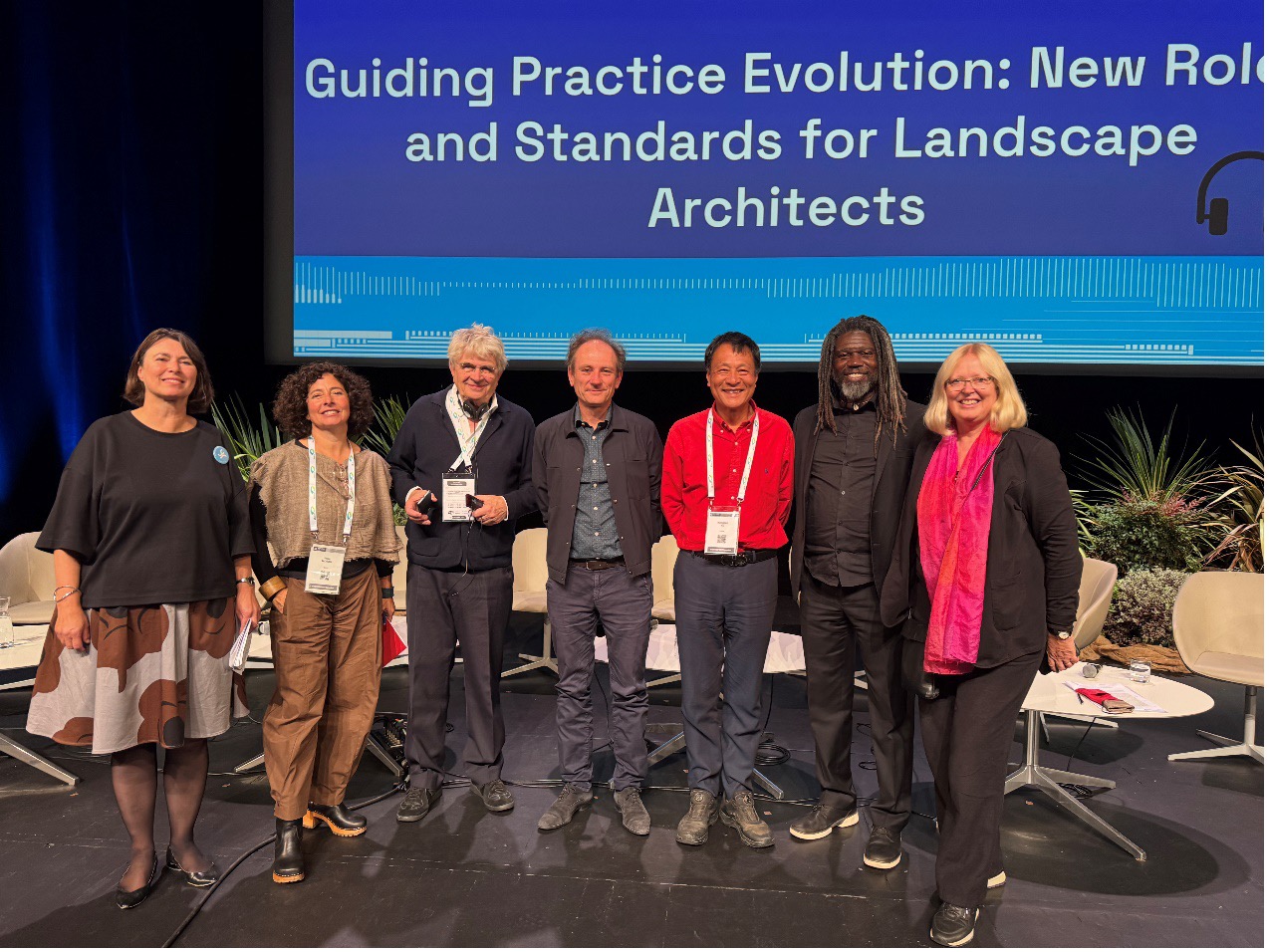
On the morning of 12 September, during the conference's keynote session, Professor Yu delivered a presentation titled Designing a Sponge Earth: Landscape Architecture and Climate Resilience. He proposed that in confronting the global climate crisis and urban flooding, traditional grey infrastructure such as pipelines should be replaced with green infrastructure including wetlands, rain gardens, flood-retention parks, and ecological corridors. This approach aims to achieve the objectives of retaining, slowing the discharge of, and utilising water resources. He stressed that landscape design is not merely about beautifying the environment, but rather constitutes ‘living infrastructure’ that concerns survival security and the future of humanity.


Co-hosted by IFLA and the French Federation of Landscape Architects (FFP), the conference took place at La Cité Convention Centre in Nantes, serving as the annual global gathering for the landscape architecture sector. Alongside Professor Yu, Dutch landscape architect Dirk Sijmons and French landscape architect Bertrand Folléa delivered keynote presentations during the same session, collectively exploring international experiences in addressing climate challenges through landscape design.
International professional media covered both the conference and keynote speeches before and after the event, highlighting how Professor Yu Kongjian's advocated concepts of ‘sponge cities’ and ‘sponge earth’ are emerging as crucial pathways for global natural infrastructure and climate adaptation. His practical experience gained from projects such as Nanchang's Yuzhou Island, Sanya's East Coast Wetlands, and Bangkok's Bang Khae Forest Park has become a significant reference for international urban and regional transformation.
This presentation not only demonstrated Peking University's academic leadership in ecological infrastructure and sustainable development research but also further highlighted the significant voice of Chinese scholars in global landscape design and climate action.
Edited by Zhu Liangliang
